
What is Sea Buckthorn?
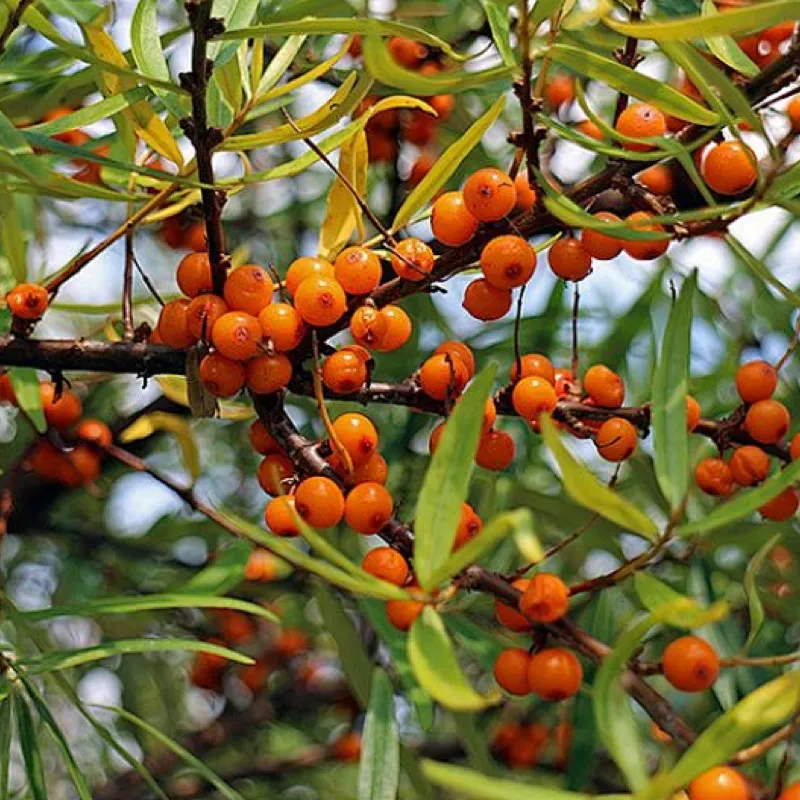
Sea buckthorn, one of the oldest plants on earth, named “Seabuckthorn” in English, sea buckthorn is a kind of natural plant rich in biologically active substances, 428 kinds of nutrients, containing 18 kinds of amino acids needed by human body, sea buckthorn is known as “vitamin treasure trove” in fruits. Sea buckthorn is known as “vitamin treasure house” in fruits. The content of vitamin C per 100 grams of Chinese sea buckthorn fruits is as high as 1118 mg, which is 3 to 9 times more than that of the peach. Therefore, it is well deserved that sea buckthorn is known as the king of vitamin C.
Sea buckthorn is a kind of natural plant with rich nutrition and excellent medicinal properties. China is the earliest country in the world to record the medical use of sea buckthorn.
More than one thousand years ago, the classical Tibetan medical works “King of the Moon Medicine Clinic” and “Four Medical Classics” recorded the medical use of sea buckthorn. Later on, the Tibetan medical masterpieces “Lan Liuli” and “Ancestors’ Dictation” focused on sea buckthorn.
The traditional Chinese medicine classic “Compendium of Materia Medica” describes sea buckthorn as “real, acidic odor, warm, non-toxic, the main treatment for prolonged dysentery and abdominal distension and yellow lethargy, food to produce fluids, sobering up and quenching thirst”.
In 1977, the Ministry of Health of China included sea buckthorn in the Pharmacopoeia of the People’s Republic of China as the first batch of dual-use plants.
Sea buckthorn contains more than 400 kinds of nutrients and active ingredients. Because the environment of sea buckthorn is extremely harsh, after the severe cold and heat as well as the growth and maturity period of up to ten months, secondary metabolites are formed in its body, so the secondary metabolites contained in sea buckthorn can not be found in other plants, which are unique to sea buckthorn. Especially the Chinese small-fruited sea buckthorn grown in Inner Mongolia, due to its specific latitude and longitude of 40° as well as its special growing environment, it contains more secondary metabolites and stronger activity than other varieties of sea buckthorn.
Distribution of sea buckthorn
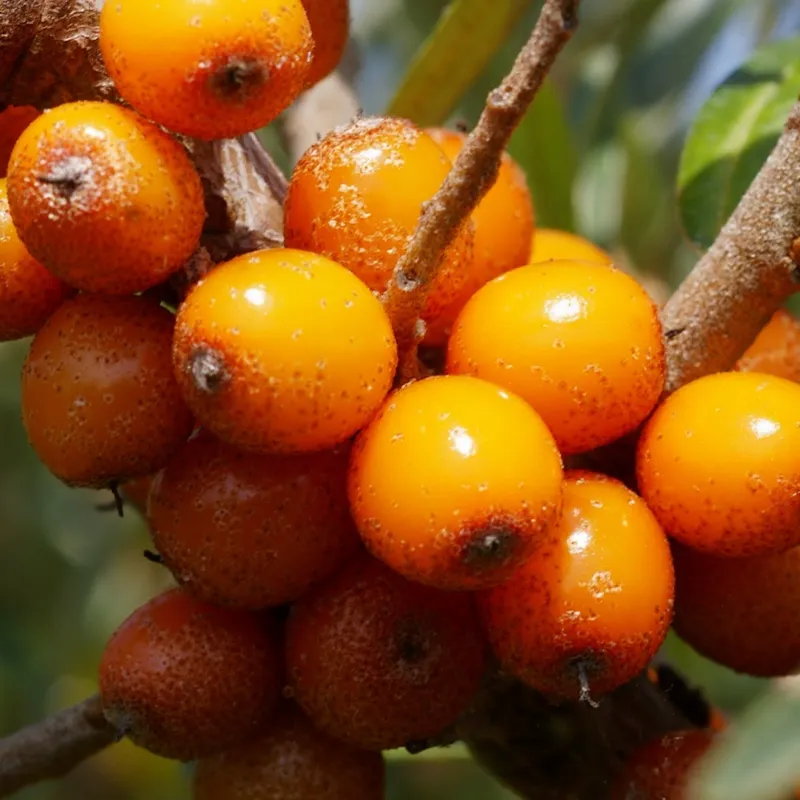
Sea buckthorn, also known as vinegar willow and sour thorn, has very developed lateral roots and strong ability of tiller sprouting and spreading, which has a strong role in soil and water conservation and improving the ecological environment. Sea buckthorn belongs to the genus of sea buckthorn in the family of family Hoodiaceae, and its geographical distribution is very wide, spanning the temperate regions of Eurasia and Asia, and is divided into six species and twelve subspecies. China is the birthplace of sea buckthorn in the world, and it is the country with the largest area and the largest variety of sea buckthorn plants. The area of sea buckthorn accounts for 94% of the total area of sea buckthorn in the world, with a total area of 20 million mu.
Inner Mongolia Autonomous Region is one of the fastest developing provinces and regions of sea buckthorn resources in China, accounting for more than 40% of the total area of sea buckthorn in China. The sea buckthorn ecological park with Helinger County of Inner Mongolia as the core, the altitude of the plateau is above 1800 meters, the air is fresh, the climate is pleasant, the sunshine is sufficient, and it is a pure natural green ecological reserve far away from the pollution. The unique growth environment here has produced the wild Mongolian sea buckthorn of the Barbarian Mountain, which is the first among the three famous sea buckthorns of the world, and it has become the best raw material source of the sea buckthorn products of the company of Astronauts.
Nutritional value of sea buckthorn
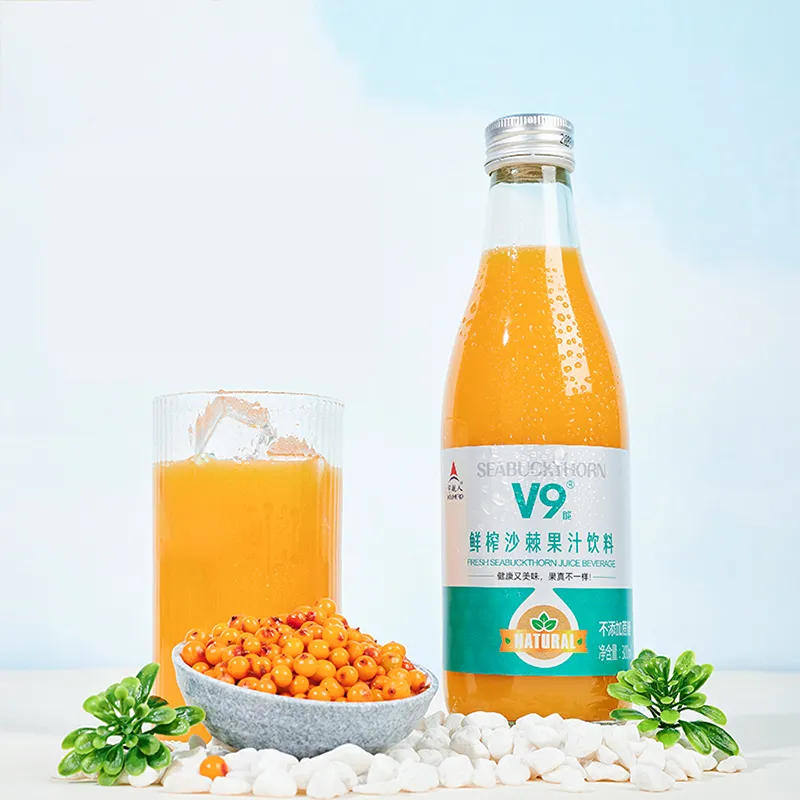
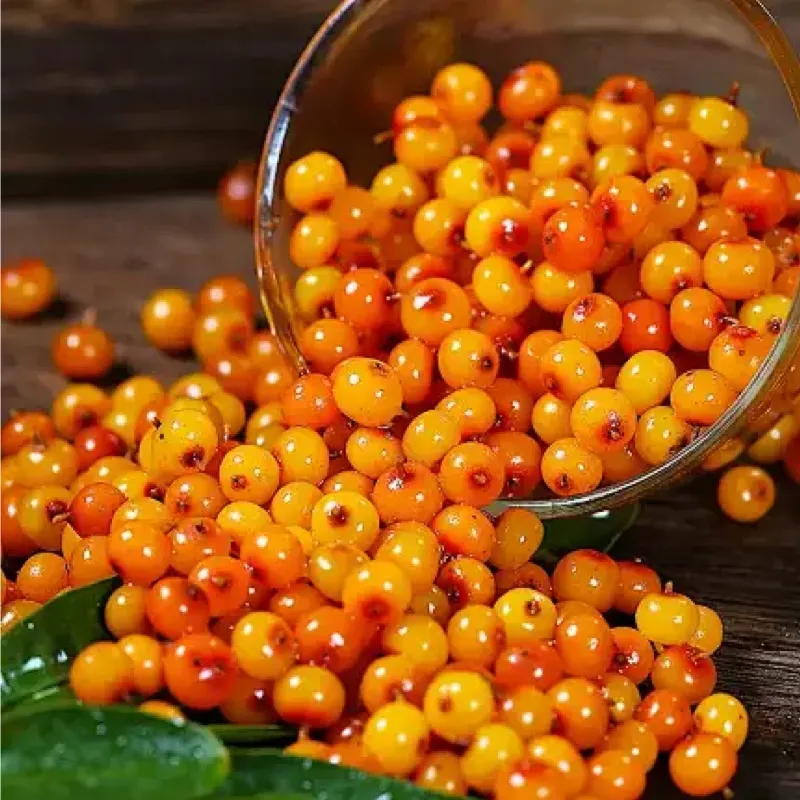
Seabuckthorn fruit is rich in nutrients, it is measured that its fruit contains many kinds of vitamins, fatty acids, trace elements, linolein, sea buckthorn flavonoids, superoxide and other active substances and various amino acids needed by human body. The content of vitamin C is very high, per 100 grams of juice, the content of vitamin C can reach 825-1100 mg, 2-3 times of kiwifruit, known as the king of vitamin C. The fruit contains 7.5%-10% sugar. It contains 7.5%-10% sugar and 3%-5% acid.
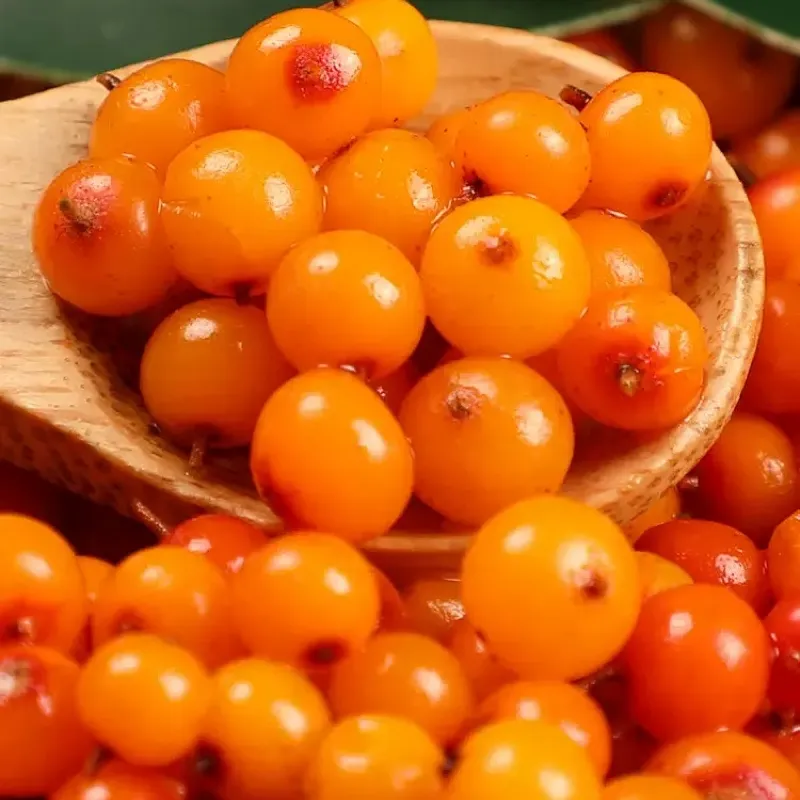
Sea buckthorn fruit contains isorhamnetin and its glycosides, quercetin, kaempferol and other 7 kinds of xanthophyll substances, with cough, asthma, expectorant, dilate coronary blood vessels, lower cholesterol, commonly used in the treatment of ischemic heart disease, and the effective rate of treating angina reaches 94%.
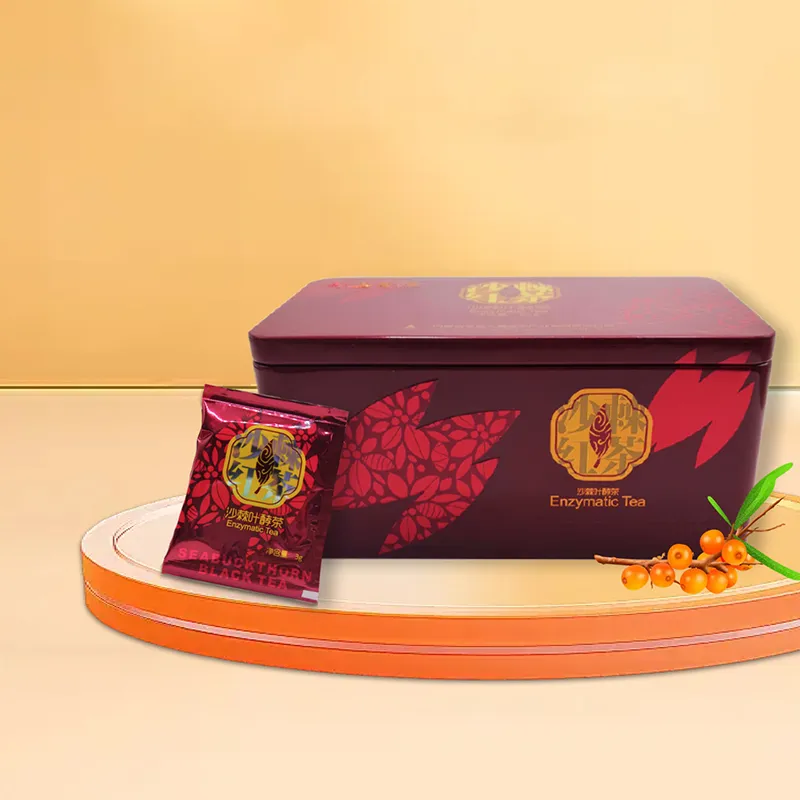
Sea buckthorn leaves contain 15.75% crude protein, 9.48% crude fat, 14.04% crude fiber, 54.84% nitrogen-free leachate, and sea buckthorn leaves can be used to make health tea.
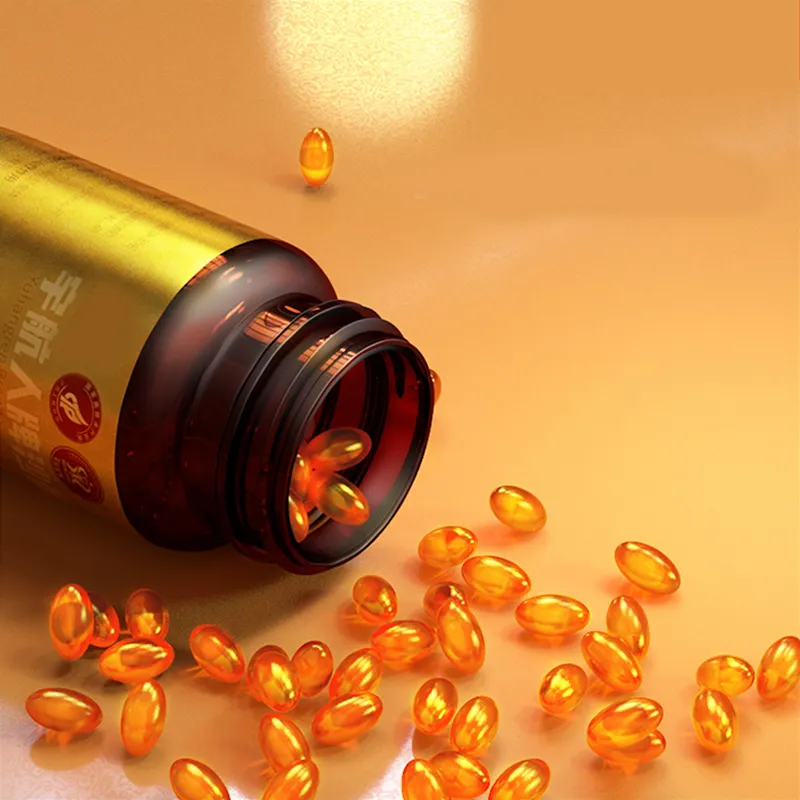
Sea buckthorn oil contains 206 kinds of active substances which are beneficial to human body, among which there are 46 kinds of biologically active substances, containing a large amount of vitamin E, vitamin A, flavonoids, etc., which have the special pharmacological properties of anti-fatigue and enhancement of vitality of the body and anticancer, and have the pharmacological properties of protecting and accelerating the repair of gastric mucous membrane and increasing the bifidobacteria of intestines, and also have the functions of decreasing the plasma cholesterol and reducing the cholesterol content of the vascular wall, so that can prevent and control the hyperlipidemia and atherosclerosis. It can reduce plasma cholesterolhyperlipidemia , reduce cholesterol content in blood vessel wall, prevent and control and atherosclerosis, and promote wound healing.
Therapeutic value of sea buckthorn
Beauty value of sea buckthorn
Sea buckthorn – ecological construction value
Sea buckthorn is recognized by the United Nations Environmental Development Agency as a pioneer tree species for ecological construction, and China has listed it as an important recommended tree species for improving the ecological environment in the Loess Plateau and desert fringe areas. Sea buckthorn can effectively play the roles of water conservation, soil fixation, fertilizer preservation and air purification, etc., and it has a very good restoration effect for the ecologically fragile area, so it is used by foresters as an ecological tree species for rapid restoration of vegetation in the arid and semi-arid areas, and its ecological benefits are extremely remarkable.