
Fish Oil vs Sea Buckthorn Oil: Which Supplement Should You Choose?
Have you ever stood in front of the dietary supplement aisle, lost in thought, wondering which of the myriad Omega supplements is the one your body genuinely craves?
For decades, Fish Oil has been hailed as the “gold standard” for cardiovascular and cognitive health. However, in recent years, a rising star known as the “dark horse of the plant kingdom”, Sea Buckthorn Oil, has been rapidly gaining ground. Not only is it the perfect alternative for vegans, but it has also taken the global skincare and wellness markets by storm, thanks to its unique nutrient profile that targets skin rejuvenation and chronic dryness.
Can sea buckthorn oil truly replace fish oil? Which one reigns supreme: Omega-3 or Omega-7? Today, we will deeply break down the ingredients, benefits, and target audiences of fish oil vs sea buckthorn oil to help you make the smartest choice.
What is Fish Oil?
Fish oil is an extremely powerful dietary supplement obtained from the fat tissues of deep-sea fish. Being one of the most thoroughly studied and oldest supplements used in medicine, it is still the basis for general anti-inflammatory protection and cardiovascular health.
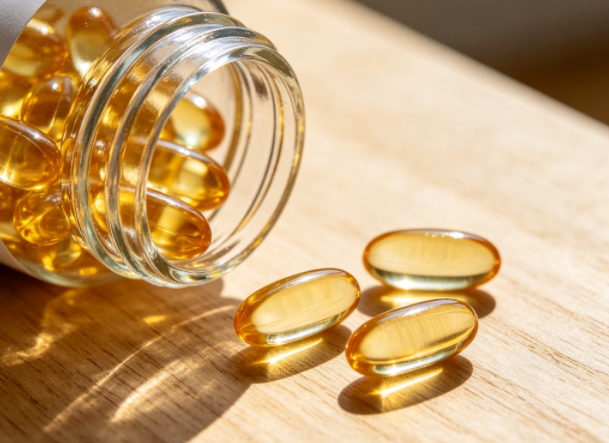
Sources of Fish Oil
The best quality fish oil products are normally sourced from deep-sea fish living in cold water and having a shorter lifespan to prevent contamination with heavy metals. The major sources include:
- Salmon
- Sardine
- Anchovy
- Mackerel
Main Nutrients in Fish Oil
The core value of fish oil lies in its rich concentration of two long-chain Omega-3 polyunsaturated fatty acids that the human body cannot synthesize efficiently on its own:
EPA (Eicosapentaenoic Acid): A potent natural anti-inflammatory agent. Multiple double-blind clinical studies have confirmed that EPA primarily works to reduce systemic inflammation, protect the cardiovascular system, and balance lipid profiles.
DHA (Docosahexaenoic Acid): Known as “brain gold” – essential for the brain and retina structure. The basic functions of DHA are supporting cognitive function and improving vision as well as providing nutrition for fetus during pregnancy.
What is Sea Buckthorn Oil?
Sea buckthorn oil is extracted from the berries and seeds of the sea buckthorn plant (Hippophae rhamnoides). This is a remarkably resilient plant capable of thriving in extreme climates, including alpine cold, severe droughts, and nutrient-poor soils.

Core Regions and Ecological Value
The finest quality of sea buckthorn oil can be produced from plants that grow in pure environments where there are huge variations in temperature between night and day and when the plants are subjected to high ultraviolet light. The ecological significance of sea buckthorn is not only limited to its use as a medicinal herb but also in fighting against desertification and soil erosion.
Types of Sea Buckthorn Oil
While fish oil consists of ingredients that have a fairly standard composition, sea buckthorn oil results in extremely diverse nutritional compositions based on which part of the plant is being used for extraction. When choosing sea buckthorn products, customers need to understand their difference:
Sea Buckthorn Seed Oil: extracted from the firm seeds of the fruit. It is a pale yellow oil full of essential polyunsaturated fatty acids, mostly plant-based Omega-3 (ALA), along with Omega-6 and Omega-9.
Sea Buckthorn Berry Oil (Fruit Oil): extracted from the bright, orange-red fruit pulp. The result is an exceptionally unique deep orange-red oil, one of nature’s richest sources of Omega-7 (palmitoleic acid), loaded with Vitamin E, carotenoids, and superoxide dismutase (SOD).
Fish Oil vs. Sea Buckthorn Oil: Side-by-Side Comparison
To help you easily visualize the differences, here is a breakdown comparing marine-based Omegas with plant-based Omegas:
| Nutritional Profile / Dimension | Fish Oil | Sea Buckthorn Oil (Berry/Seed Blend or Pure Berry) |
| Core Components | Omega-3 (High-concentration EPA & DHA) | Omega-7 (Palmitoleic acid), balanced with Omega-3, 6, 9 |
| EPA Content | High | Very Low (Trace amounts) |
| DHA Content | High | None |
| Omega-7 Content | Minimal (Trace amounts) | ★★★★★ (Exceptional; nature’s highest source) |
| Vitamin E & Carotenoids | Low | Extremely High (Natural antioxidants) |
| Vegan Friendly | No (Animal-derived) | Yes (100% plant-based) |
Heart Health Showdown: Fish Oil vs. Sea Buckthorn Oil
Maintaining cardiovascular health is the primary goal for most consumers researching these oils. In this arena, the volume of clinical evidence between the two differs significantly.
Fish Oil Benefits for Heart Health
Decades of large-scale clinical trials consistently demonstrate that the EPA and DHA in fish oil are the “gold standards” for cardiovascular prevention:
Managing Blood Lipids: Clinically proven to significantly lower blood triglycerides.
Supporting Vascular Function: Maintains endothelial health, improves blood vessel elasticity, and promotes healthy blood pressure.
Reducing Inflammation: Blocks the release of inflammatory cytokines, lowering the risk of atherosclerosis and plaque formation.

Sea Buckthorn Oil Benefits for Heart Health
Protection of the heart due to synergistic substances found in sea buckthorn oil:
Highly beneficial flavonoid content and Vitamin E are potent antioxidants, thus inhibiting the oxidation of Low-Density Lipoprotein (LDL, “bad” cholesterol). Omega-7 contributes to vessel wall protection and enhances the blood flow.
Winner for Heart Health: Fish Oil. In case your major objective is normalization of lipid levels, reduction of triglyceride concentration, and prevention of cardiovascular diseases, fish oil wins based on its scientific credibility.
Skin & Beauty Showdown: Fish Oil vs. Sea Buckthorn Oil
As one of the fastest-growing search trends in the beauty and anti-aging markets, these two oils approach skincare from completely different angles.
Fish Oil for Skin
Fish oil improves the skin primarily through an “inside-out” systemic anti-inflammatory mechanism:
It calms internal bodily inflammation to soothe and relieve skin dryness.
It supports the skin barrier and is frequently used as a clinical supplement to manage inflammatory skin conditions like acne-prone skin, eczema, or psoriasis.
Sea Buckthorn Oil for Skin
Sea buckthorn oil is a certified superstar in the skincare world. The Omega-7 it contains is an essential structural component of human skin and sebum:
Enhanced Hydration: Provides intensive hydration and helps heal severe dehydration from within by replenishing natural oils.
Elasticity and Restoration: Encourages collagen formation, increases elasticity, and visibly reduces the appearance of wrinkles and roughness caused by external factors.
Antiaging Effects: Thanks to its high concentration of beta-carotenes and Vitamin E, this ingredient helps fight free radicals, thus preventing skin aging that is caused by UV radiation and air pollution. Due to its antiaging effects, this ingredient is very popular in expensive beauty supplements.
Skin & Beauty Winner: Sea Buckthorn Oil. When it comes to skin hydration, elasticity, and skin tissue renewal, sea buckthorn oil benefits for the skin surpass those of any other cosmetic product hands down.
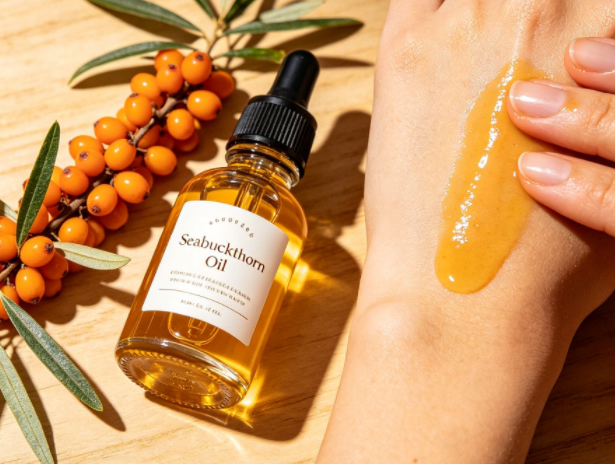
Smart Buying Guide & Combining Strategies of Sea Buckthorn Oil vs Fish Oil
Can sea buckthorn oil completely replace fish oil?
The answer is no. Their nutritional frameworks are entirely distinct. Fish oil provides long-chain Omega-3s (EPA and DHA), whereas sea buckthorn oil spotlights Omega-7 and high-concentration plant antioxidants. If you completely swap fish oil for sea buckthorn oil, you will lose out on the high-strength EPA/DHA needed to support cardiovascular health and deep joint anti-inflammation.
Can fish oil and sea buckthorn oil be taken together?
Definitely, yes. It will be even better to use them together. In addition, using both types of oil is considered a surf and turf principle in advanced nutrition practices. Both types of oil get metabolized through different metabolic pathways in our body. Therefore, there is no chance that there will be any kind of interaction between fish and sea buckthorn oil. As a consequence, you will get the full spectrum of fatty acids including Omega-3, Omega-7, Vitamin E, and antioxidants.
Side Effects and Experience Comparisons
Fish Oil Pain Points: Some consumers experience fishy burps or mild gastrointestinal discomfort.
Pro-Tip: Opt for enteric-coated softgels or take them immediately after a meal to significantly minimize the risk of fishy burps.
Sea Buckthorn Oil Pain Points: Generally exceptionally well-tolerated with very few reported adverse effects. A small minority of people might experience mild acid reflux when taking high doses on an empty stomach; taking it with meals is similarly recommended.
Summary: How Should You Choose?
Select Fish Oil Only if Your Goals Are: Heart Health Management, Triglyceride reduction & Management, High-intensity joint inflammation management, Prenatal Nutrition, and Increase Brain Power (High Need for EPA & DHA)
Select Sea Buckthorn Oil Only if Your Goals Are: Hydration and Anti-aging of the Skin, Get 100% Plant Based Vegan Alternative, Dry Eye from Screen Exposure, and Mucosal dryness from Menopause.
Select Both Together If Your Goals Are: Comprehensive protection to both internal heart health and external skin rejuvenation for overall cell-level body defense mechanism.
FAQs about Fish Oil vs Sea Buckthorn Oil
Is sea buckthorn oil better than fish oil?
Neither is necessarily “better” than the other. Fish oil works better for cardiovascular functions and joint inflammation prevention, while sea buckthorn oil works well for skin hydration, cell regeneration, and alleviating dry mucosa such as dry eyes.
Is sea buckthorn oil the same as omega-7?
No, sea buckthorn oil is not identical to Omega-7. It is a complex plant oil containing a blend of Omega-3, 6, 7, and 9, alongside various vitamins and antioxidants. It is simply famous because its concentration of Omega-7 is exceptionally rare and unmatched in the plant world.
Who should avoid sea buckthorn?
Individuals scheduled for surgery, patients taking blood thinners (anticoagulants) or diabetes medications, and anyone with a severe allergy to the sea buckthorn plant should avoid taking sea buckthorn oil.
Who should avoid taking fish oil?
Those who have a serious allergy to seafood or fish, individuals with clotting problems, surgery patients, and patients on prescribed anti-clotting medications such as Warfarin are not supposed to use fish oils.
Related Products
