
Is Sea Buckthorn Juice High in Sugar? Nutrition, Calories & What to Know
Sea buckthorn juice has a reputation as a vitamin-packed superdrink, but its sharp, tart taste makes many people wonder whether sugar is hiding behind it. The short answer is that pure sea buckthorn juice is naturally low in sugar, often well below orange juice. The catch is that sweetened blends can tell a very different story. Below, we look at real label data, calories, and key nutrients, then show you how to choose and enjoy a bottle that fits your goals.
The Short Answer: How Much Sugar Does Sea Buckthorn Juice Contain?
Sea buckthorn berries are not sugar-heavy fruit. German food composition data lists about 3.3 g of total sugar per 100 g of raw berries, and a 2022 compositional study by El-Sohaimy and colleagues put it near 4.5%. Juice made from them follows suit. For comparison, the USDA lists raw orange juice at roughly 8–9 g of sugar per 100 g.
Real product labels show the same pattern:
| Product (per 100 ml) | Sugar | Calories |
| Weleda Organic Sea Buckthorn Juice (juice and pulp) | 1.6 g | 73 kcal |
| Alnavit Organic Sea Buckthorn Juice (no added sugar) | 3 g | 52 kcal |
| Raw orange juice (USDA, approx.) | 8–9 g | 45 kcal |
In a standard 200 ml glass, that works out to roughly 3–6 g of sugar for the pure sea buckthorn products, against about 16–18 g for orange juice. These are individual brands, so your bottle may differ.
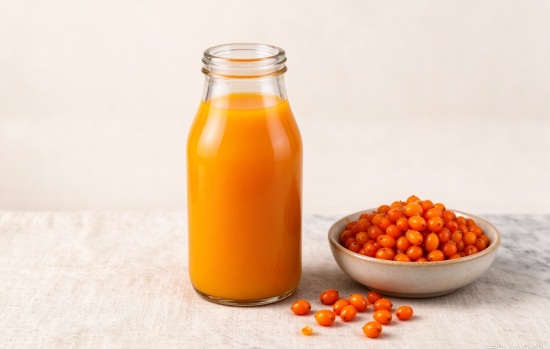
Sea Buckthorn Juice Calories: What You’re Really Drinking
The calorie picture is more interesting than the sugar one. Orange juice has fewer calories per 100 ml than the Weleda product, even though it has far more sugar. The reason is fat. Sea buckthorn pulp carries natural oils, and the Weleda label lists 3.9 g of fat per 100 ml, which pushes calories up. The Alnavit juice has less pulp and sits at 52 kcal.
So “low sugar” does not automatically mean “low calorie.” If you are counting calories, check the fat line as well as the sugar line, and remember that thick, pulpy products are usually served in small, diluted portions.
Why Some Sea Buckthorn Drinks Are Much Sweeter Than Others
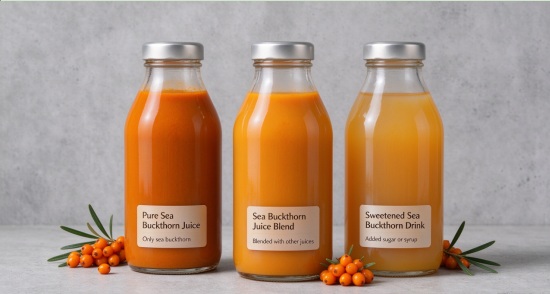
If you have read that sea buckthorn juice is “full of sugar,” you were probably looking at a different kind of product. The berries are intensely sour, so manufacturers often soften them with added sugar, syrup, or cheaper sweet juices such as apple or grape. Three categories are worth telling apart:
- Pure juice has sea buckthorn as the only fruit, sometimes with pulp.
- Juice blends mix it with other juices, so the sugar depends on what else is in the bottle.
- Sweetened juice drinks add sugar or syrup and are often diluted with water.
A product labeled “juice drink” or “cocktail” can look similar on the shelf but sit in a completely different sugar range.
How to Read the Label Before You Buy
A few seconds with the back of the bottle settles most of the question. Start with the ingredient list, where sea buckthorn should come first and sugar, glucose syrup, or concentrated apple juice should be absent. Next, look at the nutrition panel and separate “total sugars” from “added sugars,” because only the second tells you what was put in. Finally, check the serving size. Some brands list 30 or 50 ml per serving, which makes the numbers look smaller than they would in a real glass.
Beyond Sugar: What Else Is in Sea Buckthorn Juice?
The reason people drink it is vitamin C. Lab analyses of the berries report several hundred milligrams per 100 g, and the German food database lists about 450 mg per 100 g. That is far higher than oranges, though juice made from the berries will contain less than the whole fruit because of dilution and processing.
A 2023 review in Food Reviews International by Dong and colleagues also highlights flavonoids, carotenoids, vitamin E, and an unusual mix of fatty acids in the berries. Research on potential benefits such as skin healing and cardiovascular support is still developing, so it is best to treat sea buckthorn as a nutrient-dense drink rather than a treatment for anything. Nutrient levels also vary a lot with variety, harvest date, and processing, so a number on one label does not apply to every bottle.
Is It a Good Choice for a Low-Sugar Diet?
For most people trying to cut back on sugar, pure sea buckthorn juice is an easy swap for sweeter juices. The World Health Organization recommends keeping free sugars below 10% of total energy intake, and below 5% if possible. On a 2,000 kcal diet, that is about 50 g and 25 g respectively. Note that free sugars include those naturally present in fruit juices, so even unsweetened juice counts toward the limit. A low-sugar sea buckthorn drink simply leaves you far more room than orange juice does.
Still, “low sugar” is not “unlimited.” Keep portions modest, drink it with a meal, and pay attention to how you feel. If you have diabetes or take medication, ask your doctor or dietitian before making it a daily habit.
Simple Ways to Enjoy a Very Tart Juice
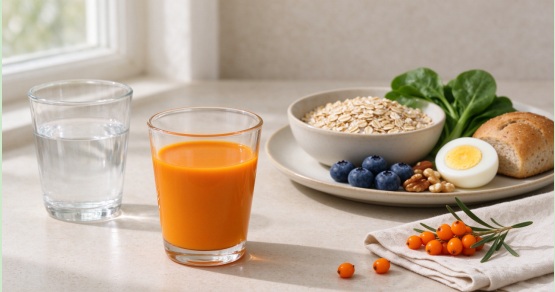
Pure sea buckthorn juice is an acquired taste. Diluting it with still or sparkling water is the easiest fix and keeps the sugar low. You can also stir a small amount into plain yogurt or oatmeal, or blend a splash into a smoothie. If you mix it with sweeter juices, keep the ratio in check, because that is where the sugar quietly climbs back up.
Final Thoughts
So, is sea buckthorn juice high in sugar? Pure juice generally is not, and that is its biggest advantage over more familiar fruit juices. What matters is the recipe in your bottle, so read the label and choose products with no added sugar. If you are looking for that kind of option, Youhero’s sea buckthorn juice range includes sugar-free and freshly squeezed varieties made from wild Inner Mongolian berries.