
How to Identify High Quality Sea Buckthorn Oil?
In the dietary supplement, functional food, and high-end cosmeceutical sectors, Sea Buckthorn Oil is highly prized for its rare and comprehensive nutritional profile. However, as market demand surges, inconsistent raw material quality has become an increasingly prominent issue. Some low-priced products suffer from adulteration with common vegetable oils, chemical solvent residues, or the loss of heat-sensitive active ingredients caused by high-temperature pressing.
For brand owners, ingredient importers, and formulation R&D specialists, the core criteria for truly high-quality Sea Buckthorn Oil are not determined by superficial packaging claims, but rather by raw material origin and species, extraction technology, and tested concentrations of active compounds. From a professional technical and supply chain perspective, this guide systematically breaks down the evaluation dimensions and procurement standards for premium Sea Buckthorn Oil.
What Constitutes High-Quality Sea Buckthorn Oil?
Truly high-quality Sea Buckthorn Oil requires a comprehensive evaluation across four dimensions: raw material sourcing, processing technology, nutritional composition, and safety compliance, rather than simply chasing extreme values for a single metric.
Stable and Traceable Premium Raw Materials
The species of sea buckthorn (such as Hippophae rhamnoides small-berry vs. large-berry varieties), growing altitude, climatic conditions, and harvest maturity directly dictate the baseline fatty acid and bioactive profile of the oil. Key areas to verify during procurement include:
Origin and Ecology: Wild-harvested or organically cultivated regions at high altitudes with large diurnal temperature variations and zero industrial pollution (such as core growing regions on the Inner Mongolia Plateau in China) typically yield berries with higher concentrations of bioactive compounds.
Harvesting and Pre-treatment: Berries must be harvested at optimal maturity and undergo immediate low-temperature preservation to strictly prevent mold, fermentation, or oxidation caused by prolonged stacking.
Full Traceability: Suppliers should maintain clear batch records that support complete traceability from the cultivation/harvesting base to finished product dispatch.
Organic Certification: For premium natural markets, verify whether both the raw material bases and processing facilities hold valid organic certifications (such as China Organic, USDA Organic, or EU Organic).

Extraction Processes Tailored to Target Bioactives
The various extraction techniques have a direct effect on the oil output, taste, color, and retention of heat-sensitive substances. The major extraction techniques used in the industry are:
Involves the use of supercritical carbon dioxide under low temperature and high pressure. This method does not produce any residue of organic solvents and ensures maximum retention of heat-sensitive substances like carotenoids and tocopherols. It yields pure and clear-colored oil and is the current preferred technique for the production of high-quality dietary and skin care supplements.
Cold Pressing:
Oil is extracted through mechanical pressing at low temperatures without the use of chemicals.
Process Selection Principle:
There is no single “one-size-fits-all” extraction method. Buyers should evaluate options comprehensively based on product positioning (e.g., zero-solvent requirements, target active concentrations, and cost budgets) alongside final lab test reports.
Balanced and Stable Natural Bioactive Compounds
The core commercial value of Sea Buckthorn Oil lies in its unique lipid structure and naturally occurring co-factors:
Fatty Acids: Includes linoleic acid (Omega-6), α-linolenic acid (Omega-3), oleic acid (Omega-9), palmitic acid, and the rare palmitoleic acid (Omega-7).
Carotenoids: Primarily concentrated in pulp oil (including β-carotene, lycopene, etc.), giving the oil its signature orange-red hue.
Tocopherols: Natural Vitamin E compounds that provide nutritional value while serving as key antioxidants to maintain the oil’s own oxidative stability.
Phytosterols: Natural plant lipid compounds widely used in functional foods and skin barrier repair formulations.
Strict Purity and Food Safety Baselines
Sea Buckthorn Oil needs to be 100% pure and should not be mixed with any cheap oils (including soybean and sunflower oils) and/or synthetic dyes. Full independent laboratory analysis is required for both food and beauty grade raw materials to assess levels of heavy metals, pesticides, aflatoxins, solvents and microbial agents.

Sea Buckthorn Seed Oil vs. Pulp Oil: How to Choose the Right Type?
Although derived from the same plant, differences in the extracted plant part give Sea Buckthorn Seed Oil and Sea Buckthorn Pulp Oil distinct appearances, fatty acid profiles, and application scenarios.
Sea Buckthorn Seed Oil
Extracted from the hard seeds inside the sea buckthorn berry. Its core advantage lies in its high content of polyunsaturated fatty acids (PUFAs), particularly an essential fatty acid ratio of linoleic acid to α-linolenic acid close to 1:1, alongside rich natural tocopherols. The oil is clear and light yellow to golden yellow, making it ideal for cardiovascular health dietary supplements, oral softgels, and lightweight facial serum formulations.
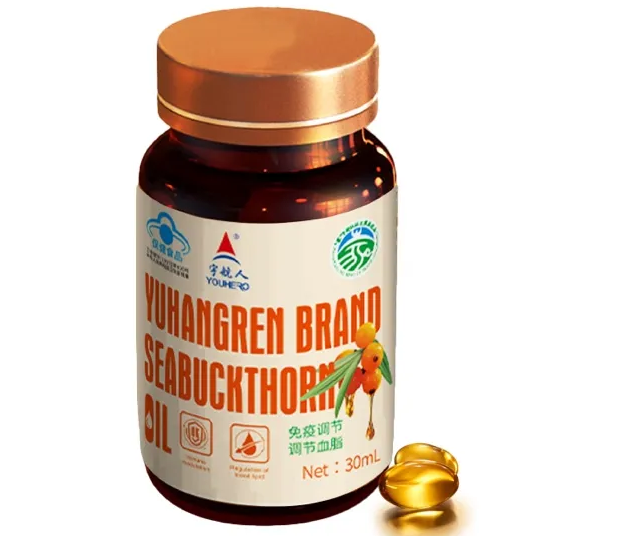
Youhero High Quality Sea Buckthorn Seed Oil
Youhero Seabuckthorn Seed Oil is made from wild organic Mongolian seabuckthorn seeds sourced from Inner Mongolia, China. Extracted using supercritical CO₂ low-temperature technology, it retains its naturally occurring unsaturated fatty acids and vitamin E.
Key Highlights
- Linoleic Acid: ≥35g/100g
- Linolenic Acid: ≥27g/100g
- Vitamin E: ≥70mg/100g
- Extraction: Supercritical CO₂ Technologe
Ideal for: Dietary Supplements, Functional Foods, and Nutritional Wellness Products.
Sea Buckthorn Pulp Oil
Extracted from the fleshy pericarp and pulp of the berry. Its defining feature is an abundance of palmitoleic acid (Omega-7), which is rare in nature, along with high concentrations of carotenoids. Due to its extremely high carotenoid content, pulp oil exhibits a rich orange-red to deep reddish-brown color. It is widely used in mucosal and gastrointestinal health supplements, oral care products, and high-end anti-aging and repair skincare formulations.
Core Parameter Comparison: Seed Oil vs. Pulp Oil
| Comparison Dimension | Sea Buckthorn Seed Oil | Sea Buckthorn Pulp Oil |
| Extracted Part | Sea buckthorn seeds | Sea buckthorn fruit pulp / pericarp |
| Core Fatty Acids | Linoleic acid (Omega-6), α-linolenic acid (Omega-3) | Palmitoleic acid (Omega-7), palmitic acid, oleic acid |
| Typical Reference Range* | Linoleic acid: ~30%–40%; α-linolenic acid: ~20%–35% | Palmitoleic acid: ~25%–40%; Palmitic acid: ~25%–35% |
| Signature Bioactives | Tocopherols (Vitamin E), phytosterols | Carotenoids (β-carotene, etc.), tocopherols |
| Typical Appearance & Color | Light yellow to golden yellow | Orange-red to deep reddish-brown |
| Primary Applications | Dietary supplements, softgels, lightweight facial oils, functional foods | Mucosal health supplements, restorative/anti-aging skincare, personal care |
*Note: The fatty acid ratios above represent common industry reference ranges. Actual values vary depending on species, origin, and extraction method; please refer to the specific batch Certificate of Analysis (COA) during procurement.
5 Core Quality Indicators for Evaluating Premium Sea Buckthorn Oil
When requesting samples and quality documentation from suppliers, prioritize verifying these five hard metrics:
Fatty Acid Profile
Determines the exact percentage of each fatty acid via Gas Chromatography (GC). This is the most direct scientific basis for authenticating Sea Buckthorn Oil, distinguishing seed oil from pulp oil, and detecting adulteration with other vegetable oils.
Quantitative Carotenoid and Tocopherol Levels
For formulations making efficacy claims or requiring specific color values, define minimum thresholds for total carotenoids (typically measured in mg/100g) and total tocopherols, and lock these specifications into the purchase contract and Product Specification sheet.
100% Purity and Non-Adulteration Verification
Cross-check ingredient lists and batch production records to confirm the product is 100% pure Sea Buckthorn Oil rather than a diluted carrier oil blend. Where necessary, carbon isotope ratio analysis or sterol profiling can be used to screen for exogenous oil adulteration.
Oxidative Stability Indicators (Acid Value & Peroxide Value)
Because Sea Buckthorn Oil is rich in unsaturated fatty acids, it is highly susceptible to rancidity when exposed to oxygen, light, and heat:
- Acid Value (AV): Reflects the content of free fatty acids in the oil. A lower value indicates fresher raw materials and superior refining/processing control (standard industry requirements are typically ≤4.0mg KOH/g, depending on specific product standards).
- Peroxide Value (PV): Reflects the degree of primary oxidation. A lower value indicates higher freshness and better storage conditions (standard industry requirements are typically ≤10.0meq/kg).
Comprehensive Quality Compliance and Third-Party Documentation
A qualified B2B supplier should provide the following documentation package with shipments:
| Document / Certification | Core Audit Purpose |
| COA (Certificate of Analysis) | Verify physicochemical parameters, fatty acid ratios, and microbiological test results for the current batch |
| Product Specification | Confirm applicable product standards, shelf life, and storage condition requirements |
| Heavy Metal & Pesticide Residue Reports | Ensure lead, arsenic, mercury, cadmium, and pesticide residues comply with destination import regulations (e.g., FDA / EU) |
| Organic Certificate | Verify the accreditation authority, certificate validity period, and specific covered product catalog |
| Quality Management Certifications (GMP / HACCP / ISO 22000) | Assess the facility’s production environment controls, cross-contamination prevention, and food safety management capabilities |
Standardized Production Process for High-Quality Sea Buckthorn Oil
From field harvest to finished product dispatch, precision management at every processing node governs final batch-to-batch consistency:
Raw Material Sorting and Low-Temperature Pre-treatment:
After picking, raw materials are cleaned and sorted. To produce seed oil the pulp is separated from the seeds which are then cleaned and chill-dried to manage the water activity and avoid fungal growth. For pulp oil, a centrifuge is employed to produce uncontaminated fruit puree.
Precision Extraction Processing:
Depending on order specifications, oil is extracted using supercritical CO₂ extraction equipment or low-temperature cold-pressing lines, with strict control over pressure, temperature, and duration to prevent thermal degradation of active compounds.
Multi-Stage Fine Filtration and Winterization:
Crude oil undergoes multi-stage precision filtration to remove plant waxes and suspended microparticles, ensuring clarity and preventing severe cloudiness or precipitation during low-temperature storage.
Nitrogen-Flushed Light-Proof Packaging and Cool/Cold-Chain Logistics:
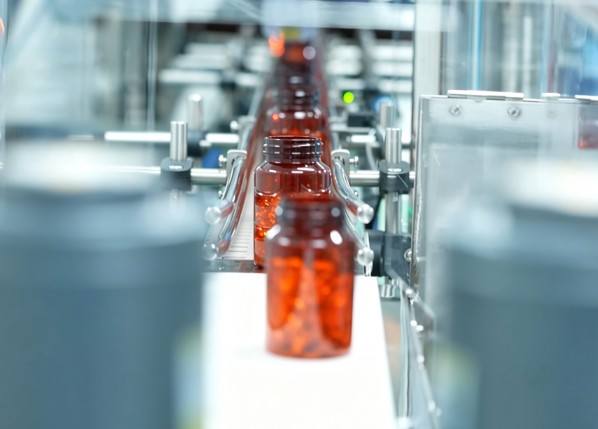
Prior to filling, finished batches undergo full quality inspection. Approved oil is packaged in food-grade or pharmaceutical-grade light-proof aluminum bottles, coated steel drums, or amber glass bottles, flushed with high-purity nitrogen to displace headspace oxygen. Daily storage should be kept in a cool, dry, dark environment (recommended below 20°C or refrigerated per specification) to maximize shelf life.
How to Select a Reliable B2B Sea Buckthorn Oil Supplier?
For importers, brand owners, and contract manufacturers, partnering with the right source manufacturer effectively mitigates supply chain disruptions and quality fluctuations:
Evaluate Upstream Raw Material Control:
Prioritize manufacturers that own cultivation or harvesting bases in core sea buckthorn regions. Direct control over raw materials ensures stable annual supply from new harvests while minimizing pesticide residue and adulteration risks at the source.
Adhere to the “Test Samples Before Ordering” Principle:
Never place bulk orders based solely on marketing brochures. Always request representative samples along with their corresponding batch COAs, and submit them to an in-house lab or third-party testing agency (such as SGS or Eurofins) for blind verification.
Assess Customization and Flexible Delivery Capabilities:
If your brand requires differentiated formulations (such as custom ratios of seed-to-pulp oil blends, tailored carotenoid concentrations, finished softgel contract manufacturing, or private labeling), choose a source factory equipped with mature OEM/ODM R&D and packaging capabilities.
Why Choose Youhero as Your Source Supplier for Sea Buckthorn Oil?
If you are looking for a Sea Buckthorn Oil manufacturer with long-term supply stability and stringent quality control systems, Youhero provides global brands, importers, and wholesale buyers with a one-stop solution from raw materials to finished products.
550,000-Mu Certified Organic Wild Sea Buckthorn Base:
Leveraging approximately 550,000 mu (~36,667 hectares) of certified organic wild sea buckthorn resources on China’s Inner Mongolia Plateau, Youhero controls berry maturity and raw material purity at the source, ensuring reliable year-round bulk supply and full traceability.
Over 30 Years of Sea Buckthorn R&D and Manufacturing Expertise:
Founded in 1995, Youhero has dedicated over three decades to the entire sea buckthorn industry value chain. Equipped with modern supercritical CO₂ extraction and cold-pressing lines, the company enforces strict quality management and full-batch testing, supported by complete COAs and third-party safety documentation.
End-to-End OEM / ODM Customization Services:
Beyond bulk Sea Buckthorn Oil supply, Youhero offers custom fatty acid and carotenoid specifications, blended formulation R&D, finished softgel and liquid drop contract manufacturing, and versatile packaging and Private Label solutions to help brands launch rapidly into global markets.

FAQs
Why is Supercritical CO₂extracted Sea Buckthorn Oil more expensive than regular pressed oil?
Whilst supercritical CO₂ extraction is capital intensive, has low batch capacity and specific material moisture and purity needs it offers excellent benefits. It enables complete removal of solvents and superior preservation of delicate bio-active materials. Consequently, it provides unique high quality and added value in the manufacture of quality nutraceuticals and beauty products.
How can I tell if Sea Buckthorn Oil is pure?
Purity is not a question of color or smell. We suggest to check the ingredient declaration, raw material origin, fatty acid composition and batch COA report and confirm with the supplier that the product is 100% pure Sea Buckthorn Oil with no added vegetable oil or carrier oil.
Which type of Sea Buckthorn Oil is the best?
Sea Buckthorn Seed Oil and Sea Buckthorn Pulp Oil each offer distinct advantages, and there is no single “best” option for every application. Seed oil is characterized by essential fatty acids like linoleic acid and α-linolenic acid, whereas pulp oil is rich in palmitoleic acid and carotenoids. Consumers and procurement teams should select the appropriate type based on intended product use, formulation requirements, and target active ingredients.
Related Products


