
How to Choose a Reliable Sea Buckthorn Juice Manufacturer?
In today’s global healthy beverage and functional food market, Sea Buckthorn Juice is rapidly becoming a breakout product category for brands, health supplement enterprises, restaurant chains, and bulk ingredient importers, thanks to its exceptionally high Vitamin C content, natural total flavonoids, and rare Omega-7 fatty acids.
However, the sea buckthorn industry is marked by strong seasonal harvesting cycles and geographical constraints, while supplier processing technology and quality control vary widely across the market. How can you select a sea buckthorn juice manufacturer with premium raw materials, advanced processing technology, compliant certifications, and reliable delivery capabilities?
This comprehensive procurement guide evaluates potential suppliers across six key dimensions: raw material traceability, processing craftsmanship, quality certifications, customization capabilities, supply chain risk management, and sample evaluation.
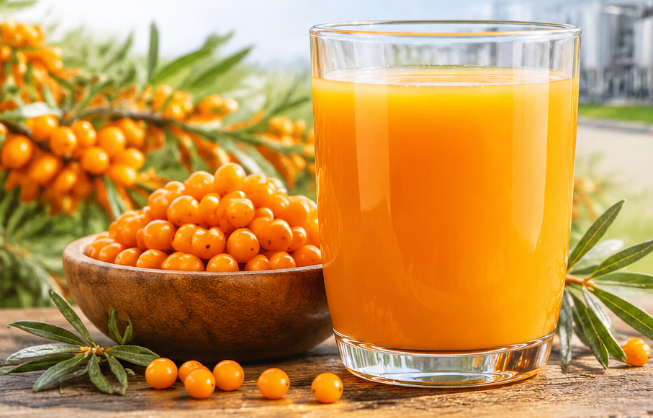
1.Inspect Raw Material Sourcing and Supply Stability
Sea buckthorn juice taste, active substances retention and overall consistency depends on the quality of raw materials. In order to make the process reliable, the manufacturer should establish a system of raw materials management.
1.1 Verify Origin, Species, and Nutritional Bioactivity Differences
Nutritional profiles and flavor characteristics vary significantly depending on the origin and species of sea buckthorn:
High-Altitude Wild Small-Berried Sea Buckthorn (Hippophae rhamnoides)
Mostly found in high alpine areas like the plateau of Inner Mongolia in China. The extremely high altitude and high sunlight radiation along with high differences between day and night temperatures (above 20°C) make the wild sea buckthorn produce highly effective natural substances.
The level of Vitamin C in it (800-1500 mg/100g), flavonoids, and natural sea buckthorn fruit oil containing rare Omega-7 palmitoleic acid is far more than those of large berries grown at lowland plains.
Plain / Large-Berried Sea Buckthorn:
Features larger fruit, higher water content, and lower acidity, but its bioactive nutrient concentration is relatively diluted. It is mainly used in blended beverage formulations.
Origin Traceability and Credentials:
Buyers should request manufacturers to provide documentation detailing harvest base locations, seasonal batch records, and official certificates of origin.
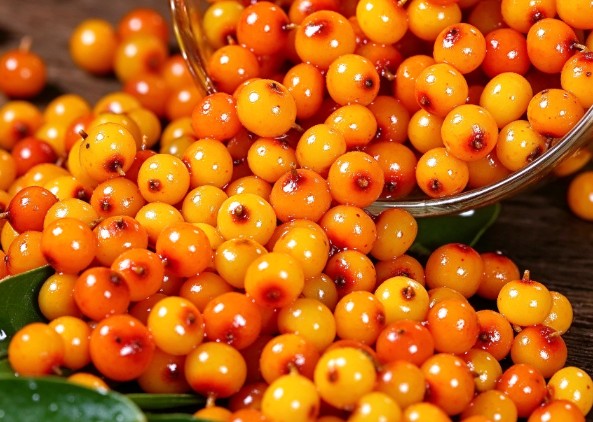
1.2 Harvesting, Multi-Stage Sorting, and Sub-Zero Cold-Chain Management
However, the sea buckthorn fruits possess fragile skins and large amounts of juice, which makes them susceptible to damage and fermentation after their ripening in late autumn and winter period.
Harvesting & Multi-Stage Sorting:
High-quality producers apply picking by hands or low-temperature vibration when the fruits are mature. They create elaborate inspection procedures at the point of fruit intake, applying multi-staged air and optical sorting.
Quick-Freezing Storage & Cold-Chain Logistics:
The harvest period is limited to just 1 to 2 months. Assess the capacity of the producer to have quick freezing production facilities in addition to -18°C constant temperature cold storage. It is only possible for factories having large capacity frozen fruit storage to make puree all year round, even during non-harvest periods such as spring and summer.
1.3 Supply Base Control and Risk Management Against Year-Round Outages
It is just as important for business-to-business customers as quality that there is no disruption in supply chains. Suppliers who do not have any control over their own harvesting base may face supply shortages or price hikes during the year as a result of changes in the raw materials market or lower yields. Customers must check the acreage of the dedicated base of the manufacturer and its share of regional harvests.
2. Evaluate Sea Buckthorn Juice Processing Technology
In addition to ingredients, the processing process has a vital impact on taste, texture, appearance (phase separation and suspension), and quality stability. The ideal Sea Buckthorn Juice Manufacturer would have proper processing procedures and provide customized solutions according to the product positioning of the client.
2.1 Pressing Technology and Fruit Oil Retention
NFC (Non-From-Concentrate) Cold Pressing:
NFC juice processing is distinct from FC juice processing because NFC juice is produced from cold pressed fresh or quick frozen sea buckthorn berries without heat, concentration by evaporation, and with the preservation of their natural color and flavor.
Natural Sea Buckthorn Fruit Oil & Phase Separation:
When left undisturbed for a while, a layer of golden natural sea buckthorn fruit oil (high in Omega-7 and Vitamin E) usually separates out on top of the pure sea buckthorn puree – a clear indicator of genuine puree. High pressure homogenization is used by professionals to evenly distribute the fruit oil and micro-pulp throughout without using emulsifiers.
2.2 Sterilization Technology and Clean Label Compliance
UHT (Ultra-High Temperature) Instantaneous Sterilization:
Maintaining temperatures between 135-140°C for a few seconds followed by quick cooling through an aseptic cold fill process ensures complete destruction of all spores and harmful bacteria while limiting damage to heat sensitive nutrients.
Zero-Additive Clean Label:
Manufacturers of high repute are capable of creating sea buckthorn puree that is 100% pure and contains “0 added sugar, 0 added water, 0 preservatives, and 0 artificial coloring or flavoring.”
2.3 Production Workflows and Equipment Hygiene Management
Clear production processes will result in consistent products and minimize contamination risks. Suppliers could be asked by buyers to provide management practices for different phases of the production process such as CIP (cleaning in place) systems, air cleaning controls, and storage facilities for final products.
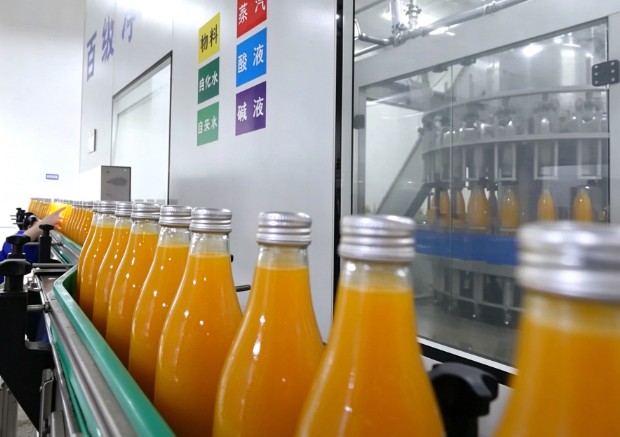
3. Verify Quality Control Systems and Food Safety Certifications
Food safety and quality control should never be compromised when choosing a sea buckthorn juice supplier. The QMS of the chosen producer should not only be well developed but documented as well.
3.1 Core Accreditation Audit Checklist
Request electronic copies of original certificates and verify their validity period, certified scope, and manufacturing facility address:
System Certifications: ISO 22000 (Food Safety Management System), HACCP (Hazard Analysis and Critical Control Points), FSSC 22000, and GMP (Good Manufacturing Practice).
Organic Certifications: USDA Organic and EU Organic. Organic certification must cover both the cultivation base and the processing facility.
Religious & Special Import Certifications: Halal and Kosher certifications to facilitate entry into Middle Eastern, European, and American markets.
3.2 Certificate of Analysis (COA) Key Test Parameters
Prior to shipping bulk orders, manufacturers must issue a third-party Certificate of Analysis for each batch. Buyers should benchmark parameters against the following reference standard:
| Test Category | Key Parameters | Reference Standard for Premium Puree |
| Microbiological | Total Plate Count, Coliforms, Mold, Yeast, Pathogens | Commercially Sterile (Compliant with target country food safety regulations) |
| Pesticide Residues & Heavy Metals | Lead (Pb), Arsenic (As), Mercury (Hg), Cadmium (Cd), and multi-pesticide screens | Undetected or far below national / EU regulatory limits |
| Physicochemical & Nutritional | Brix (°Bx), Total Acidity (calculated as citric acid), Vitamin C, Total Flavonoids | Brix ≥ 8.0–12.0%, VC ≥ 400 mg / 100g |
| Sensory | Appearance/Color, Aroma, State | Bright orange-yellow, characteristic fresh-tart aroma, off-odor free |
3.3 Batch Traceability and Quality Management Workflows
Good sea buckthorn juice producers need to have batch traceability, whereby they will track their lot numbers of the raw materials used, production data, processing parameters, and inventory data either digitally or manually. With such batch traceability, the producer can be able to determine any cause of poor quality products in the market and take action immediately.
Consumers are advised to confirm whether the producer can produce a batch traceability record per bulk shipment.
4. Compare Product Specifications and Customization Capabilities
The procurement needs vary greatly from one industry vertical to another. For instance, the food and beverages industry will need bottled products ready for distribution to the retailers, the health supplement industry will require highly pure sea buckthorn puree to serve as the raw material.
4.1 Understand Sea Buckthorn Juice Product Formats
Clarify your target product positioning and evaluate the formats your supplier offers:
Pure Sea Buckthorn Juice: Direct-pressed from sea buckthorn berries, retaining the natural flavor and high acidity of the fruit.
Sea Buckthorn Puree: Retains a higher proportion of natural fruit pulp and oil, featuring higher viscosity, making it an ideal base ingredient for beverages and food processing.
Sea Buckthorn Juice Blends: Formulated with complementary ingredients like passion fruit, apple, or honey to soften the intense natural acidity, making it suitable for Ready-To-Drink (RTD) consumer beverages.
Sea Buckthorn Juice Concentrate: Low-temperature concentrated to reduce water content and shipping volume, facilitating efficient blending and long-distance transport in industrial applications.
Confirm specific Technical Data Sheets (TDS) and physicochemical parameters with suppliers to prevent specification misalignments during downstream manufacturing.
4.2 Evaluate Packaging and Size Options
Packaging requirements vary by sales channel and application scenario:
Food & Beverage Brands: May require small-format retail bottles, spouted pouches, or single-serve stick packs.
Beverage Processors & Blenders: Require large-capacity food-grade aseptic bags (Aseptic Bag in Drum), drums, or refrigerated IBC totes.
Importers & Wholesalers: Require palletized packaging solutions optimized for ocean freight and long-distance transport.
Confirm packaging materials, capacity specifications, pressure resistance, storage requirements, shelf life, and stacking parameters ahead of time.
4.3 Evaluate OEM and Private Label Services
If you are looking to start an exclusive line of sea buckthorn beverages, then you should go for companies that have already developed expertise in OEM or ODM/Private Label. Consider the following factors while finalizing the company:
R&D Formulations: Are there any facilities available for packaging design and labeling?
Packaging & Labeling: Do they offer structural packaging design, packaging material sourcing, and label compliance verification support?
Brand Customization: Do they support contract aseptic filling under your private label trademark?
Target Market Compliance: Can nutrition facts panels and packaging specs be adapted to match destination country regulations?
Sampling & Scaling Workflows: Are there defined procedures for bench-top sampling, pilot runs, and commercial mass production?
Manufacturers with flexible customization capabilities and dedicated R&D support help buyers minimize trial-and-error costs during new product development and market expansion.

5. Assess Production Capacity and Supply Chain Reliability
Securing a qualified sample is only the first step. For long-term B2B partnerships, a manufacturer’s capacity for reliable execution and on-time delivery of bulk orders is equally critical.
5.1 Review Factory Manufacturing Capacity
Examine the machinery configuration, extent of automation, daily/monthly capacity in reality, and scheduling process of the supplier. Especially when there are higher order requirements or peak seasons of sales, ensure that the factory has backup capacity to meet the orders within set parameters.
Don’t be swayed by the claimed maximum capacity. Develop your own objective opinion through analysis of the current portfolio of clients of the factory and its order records.
5.2 Confirm MOQs and Lead Times
Minimum Order Quantity (MOQ) and production lead times directly impact procurement budgets and cash flow turnover. Different product formats, packaging options, and customization levels carry distinct MOQ requirements.
Confirm the following upfront:
- What is the MOQ for standard off-the-shelf inventory?
- Are there additional MOQ requirements for custom formulations or specialized packaging?
- Do custom-printed packaging materials require separate volume commitments and warehousing?
- How long does sample development and pilot testing take?
- What are the lead times for master production scheduling, batch processing, and factory dispatch?
These parameters enable accurate planning for procurement budgets, safety stock buffers, and retail launch schedules.
5.3 Evaluate Export Experience and Logistics Capabilities
For international buyers, evaluating the supplier’s cross-border export experience is vital:
Export Licensing & Documentation: Can they provide full export clearance paperwork (e.g., Certificate of Origin, Free Sale Certificate, Health Certificate)?
Regulatory Familiarity: Are they knowledgeable about food import compliance standards in your target market?
Label Compliance: Can they handle target-language labeling or compliant custom printing?
Cold-Chain & Logistics Solutions: For products requiring frozen or temperature-controlled transit, do they have established cold-chain freight partnerships and thermal monitoring protocols?
6. Request Samples and Perform Quality Evaluations
In spite of the persuasive nature of the supplier’s marketing material or the price quotes presented by them, purchasing decisions must never be made only on the basis of such marketing material. It is crucial that samples of bulk products be tested for standardization of the same.
6.1 Evaluate Sensory Quality
Sea buckthorn juice possesses a distinct natural tartness and botanical aroma. Variations in origin, processing, and formulation yield different sensory outcomes. Evaluate samples using a standardized SOP:
Appearance & Color: Observe whether the juice exhibits a vibrant, natural orange-yellow color, free from dulling or browning indicative of oxidation.
Aroma: Check for the characteristic fresh aroma of sea buckthorn fruit, ensuring the absence of off-odors, fermentative notes, or rancid oil smells.
Flavor & Mouthfeel: Assess the balance of acidity and sweetness, as well as the presence of a natural fruity finish.
Texture & Suspension: Examine pulp distribution uniformity, viscosity, and mouthfeel granularity.
Phase Separation & Stability: Observe phase separation speed when left undisturbed, and verify re-emulsification behavior upon gentle shaking.
Note: Pure sea buckthorn juice or whole-fruit puree contains natural fruit oil and pulp. Minor phase separation or oil-water layering is a natural physical characteristic and should not be misconstrued as a quality defect; evaluate stability objectively against technical data sheets and homogenization specifications.
6.2 Compare Product Specifications Against Test Data
Cross-check physical sample test results against the supplier’s Technical Data Sheet (TDS) and batch Certificate of Analysis (COA):
Brix & Acidity: Verify that measured soluble solids and acidity fall strictly within promised tolerance bands.
Physicochemical & Microbiological Audits: For large-volume contracts or high-spec projects, submit samples to an independent third-party laboratory (e.g., SGS, Eurofins) for secondary testing of pesticide residues, heavy metals, and microbiological counts.
6.3 Conduct Storage and Stability Testing
If developing a private label product or shipping long distances, test product stability under simulated storage and transit conditions:
Accelerated Stability Testing: Store samples across varied temperature gradients (refrigerated, ambient, high-humidity) for 7–14 days to evaluate package seal integrity, color shifts, flavor loss, and sediment behavior.
Transit Durability: Assess packaging resilience against vibration, pressure changes, and compression to lower transport loss risks.
7. Evaluate Total Cost, Communication Efficiency, and Long-Term Partnership Value
Price is a key procurement factor, but it should never be the sole criterion when selecting a sea buckthorn juice manufacturer. Unusually low quotes often indicate compromises in raw material sourcing, sterilization standards, packaging quality, or inspection protocols. Evaluate suppliers through the lens of Total Cost of Ownership (TCO) and long-term value creation.
7.1 Look Beyond Base Unit Pricing
When comparing vendor quotes, ensure all proposals are built upon identical product specifications, pulp content, packaging materials, Incoterms (FOB/CIF), and order volumes.
Factor the following hidden cost variables into your Total Cost of Ownership (TCO) model:
- Quality assurance guarantees for raw materials and finished goods
- Formulation R&D and custom processing fees
- Packaging material procurement and inventory holding costs
- Impact of Minimum Order Quantities (MOQ) on working capital
- End-to-end cold-chain and international freight charges
- Third-party testing, export customs clearance, and certification documentation fees
Cost comparisons yield actionable insights only when specifications and terms are fully standardized.
7.2 Assess Supplier Communication and Service Responsiveness
Efficient, transparent communication reduces friction costs and information asymmetry throughout the partnership.
A dependable supplier demonstrates professional service standards:
Response Agility: Promptly and accurately answers inquiries regarding product specifications, processing technologies, scheduling, and logistics coordination.
Technical Support: Proactively understands your product vision—especially on OEM/Private Label projects—and offers constructive recommendations regarding processing, formulation, and regulatory compliance.
Problem Resolution: Actively provides technical analysis and corrective action plans when unexpected challenges arise.
7.3 Consider Long-Term Partnership Potential
For importers, brand owners, and bulk wholesalers, selecting a supplier means establishing a stable, strategic supply chain alliance rather than executing a one-off transaction.
Evaluate long-term partnership value across these dimensions:
Batch Consistency: Demonstrated capacity to deliver uniform quality across multiple production runs.
Fulfillment Stability: Ability to guarantee prioritized allocation during raw material shortages or peak seasonal demand.
Continuous R&D Capabilities: Aptitude for tracking market trends to support product upgrades or new formulation development.
Supply Chain Resilience: Financial health, robust warehousing, and sound logistics infrastructure.
A manufacturer capable of consistently meeting volume demands, backing operations with strong technical expertise, and collaborating to scale market share delivers long-term value that far exceeds short-term price discounts.
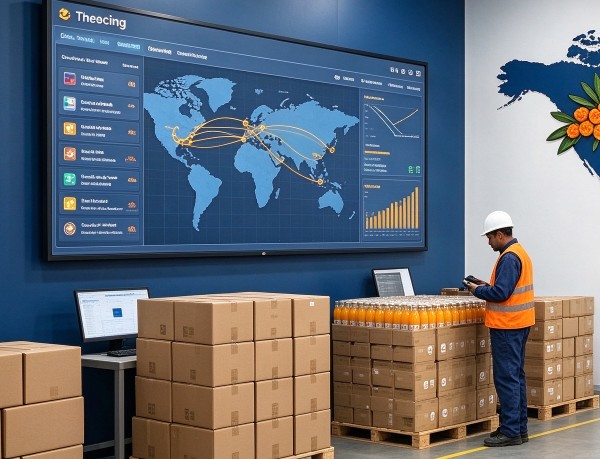
Partnering with Youhero: Your Trusted Global Partner for Organic Sea Buckthorn Juice Manufacturing
If you are seeking a sea buckthorn juice manufacturer that combines raw material base control, international regulatory certifications, and modern OEM/ODM production capabilities, Youhero is your ideal partner.

Dominant Supply Base Advantage: Deeply rooted in the sea buckthorn industry for decades, Youhero controls 550,000 mu (approx. 36,600 hectares) of certified organic wild sea buckthorn bases on the Inner Mongolia Plateau. Sourcing up to 70% of China’s core small-berried sea buckthorn harvest annually, Youhero guarantees year-round supply stability and exceptional batch-to-batch consistency.
Advanced Processing Technology: Equipped with automated NFC cold-pressing production lines and UHT aseptic filling facilities, locked-in nutrients—including Vitamin C, total flavonoids, and natural Omega-7—are preserved from orchard to bottle.
Global Accreditation: Factories and harvesting bases are certified under USDA Organic, EU Organic, ISO 22000, HACCP, and Halal standards, supplying markets across Europe, North America, Japan, and Southeast Asia.
Turnkey B2B Customization Services: From raw puree and blended drinks to single-serve pouches and glass bottles, Youhero offers complete sea buckthorn OEM/ODM solutions backed by flexible MOQs and efficient global logistics response.
Contact us today to elevate your organic sea buckthorn product portfolio!
Frequently Asked Questions (FAQ)
Can sea buckthorn juice be purchased in bulk?
Yes. Many B2B sea buckthorn juice manufacturers offer bulk purchasing options customized to client needs. Specific minimum order quantities (MOQs), product specifications, packaging types, and delivery schedules should be confirmed directly with the supplier in advance.
How can I verify if a sea buckthorn juice manufacturer is reliable?
Perform a comprehensive assessment covering raw material sourcing, processing technology, food safety certifications, product COAs, production capacity, and customer service. Request representative samples and audit supplier credentials before placing commercial orders.
Do sea buckthorn juice manufacturers provide OEM and Private Label services?
Select manufacturers, such as Youhero, offer end-to-end OEM, ODM, and Private Label services, covering custom formulation development, packaging design, brand labeling, and contract manufacturing.
Related Products


