
Omega 9 Benefits: 7 Key Benefits, Foods & Supplement Tips
Understanding omega 9 benefits is vital when assessing both overall diet and cardiovascular wellness. Omega-9 refers to an unsaturated fatty acid found in food sources; one such example being oleic acid. Our bodies produce certain omega-9 fatty acids on its own making these non-essential unlike more essential forms such as omega-3 or omega-6.
Are You Wondering If Omega-9 Is Necessary, Which Foods Provide it, and Formulators Evaluate Botanical Oil Sources? This Guide Provides Current Research, Practical Dietary Options, and Commercial Evaluation Methodologie on This Topic.

What Is Omega-9 and How Does It Differ From Omega-3, 6, and 7?
Let’s start simple. Oleic acid is the most common omega–9 in your diet. It’s also the main monounsaturated fat you consume. So when people talk about omega-9, they’re really talking about a family of fats, not just one molecule.
Chemically, omega-9 fats are more stable than polyunsaturated ones like omega-3 and omega-6. Fewer double bonds. That’s why olive oil – which is loaded with oleic acid – holds up pretty well in your pantry and during cooking. Unlike flaxseed oil, which goes rancid fast.
Here’s the big difference: your body can produce omega–9 by itself. So it’s “non–essential.” Omega-3 and omega-6? You have to get those from food. No way around it. That’s the core distinction.
To make it crystal clear, here’s a quick comparison of the main fatty acids you’ll see on labels and in studies:
| Fatty Acid | Main Type | Essential | Common Sources | Main Research / Nutrition Focus |
| Omega-3 | Polyunsaturated | Yes | Fish, flaxseed, algae | Heart health, brain function, inflammation support |
| Omega-6 | Polyunsaturated | Yes | Vegetable oils, nuts, seeds | Cell growth, immune function, structural support |
| Omega-7 | Monounsaturated | No | Sea buckthorn, macadamia nuts | Skin, mucosal health, metabolic health (emerging) |
| Omega-9 | Monounsaturated | No | Olive oil, avocado, nuts, seeds | Cardiovascular health, lipid metabolism, monounsaturated fat intake |
7 Ways Omega-9 May Support Your Health
Now, let’s get into what actually matters. What can omega-9 do for you? Keep in mind – most of these benefits come from replacing saturated fats with monounsaturated ones. Not from taking a single omega-9 pill in isolation.
1. May Support Heart Health
Swap out saturated fats. Use monounsaturated ones instead – like oleic acid. That simple trade-off is linked to better heart health markers. Cook with olive oil instead of butter. That’s a solid first step. Nothing magical. Just smarter fat choices.
2. May Help Maintain Healthy Cholesterol Profiles
When you replace saturated fats with monounsaturated ones, your LDL and HDL levels tend to respond well. It’s not about one nutrient working alone. It’s the overall pattern. Oleic acid helps keep HDL up while your body handles LDL more efficiently. But again – it’s the whole diet, not a single hero molecule.
3. May Support Healthy Blood Sugar and Metabolic Health
Some studies show that diets rich in oleic acid are linked to better insulin sensitivity. But don’t give all the credit to omega-9. The whole dietary package matters – fiber, plant compounds, other fats. Including monounsaturated fats as part of a balanced lifestyle can help. But it’s not a cure-all.
4. May Help Regulate Inflammatory Responses in Lab Studies
In cell and animal models, oleic acid has shown some ability to influence inflammatory pathways. Scientists have seen it affect the release of certain inflammatory mediators – but that’s in a lab. Interesting? Yes. Proof that it works the same way in humans? Not at all. Don’t confuse basic research with clinical treatment.
5. May Support Healthy Liver and Lipid Metabolism
Your liver is the main hub for processing fats. Giving it a reasonable balance of lipids makes sense. Some research links monounsaturated-rich diets to better liver and lipid profiles. But this doesn’t mean omega-9 can treat fatty liver disease. It’s supportive nutrition, part of a broader healthy eating pattern.
6. Contributes to Cell Membrane Structure
Oleic acid gets incorporated into your cell membranes. It helps keep them flexible and functional. Your cells need the right types of fats to stay in good shape. Oleic acid is one of those building blocks – it supports basic cellular processes that keep you going day to day.
7. What Research Says About Skin and Eye Health
This one needs a little nuance. Researchers are looking at oleic acid for topical skin repair and as a carrier in eye drops. But that’s very different from swallowing a capsule.
Think of it this way:
In academic studies, scientists test oleic acid’s physical and chemical properties in creams or lipid-based eye formulations. It’s about how it behaves on the surface or in a carrier.
In clinical reality, the evidence is thin. There’s no strong proof that taking an omega-9 pill will fix dry eyes or clear up your skin. Digestion and topical absorption are completely different pathways. Don’t mix them up.
Common Food Sources of Omega-9
Want to boost your omega-9 intake? The easiest way is through ordinary food. Not expensive supplements. Your kitchen already has what you need.
Plus, monounsaturated fats are more stable than polyunsaturated ones. They hold up well in storage and cooking. Here are the most practical sources you can actually use:
Extra Virgin Olive Oil – the gold standard. Well-studied, versatile, great for dressings and light sautéing.
Avocados and Avocado Oil – creamy, delicious, and packed with monounsaturated fat. Bonus: fiber and fat-soluble vitamins.
Nuts and Seeds (almonds, cashews, macadamias) – perfect for snacking. They deliver monounsaturated fat, minerals, and fiber in one handful.
Specialty Botanical Oils – like sea buckthorn oil. It does contain omega-9, but its real value is a more complex fatty acid profile. For everyday needs, though, olive oil and nuts are the workhorses.
Do You Actually Need an Omega-9 Supplement?
For most people eating a reasonably balanced diet? Probably not. You really don’t need a standalone omega-9 supplement. Your body makes enough. And your daily meals – cooking oils, nuts, avocados – already give you plenty.
But if you’re a product developer or brand owner, the question shifts. You’re not asking if you need it. You’re asking which botanical oil fits your formulation goals. When designing a softgel or functional oil product, you might look at sea buckthorn – not just for its omega-9, but for the whole fatty acid matrix it brings. That’s a different conversation.
Can Sea Buckthorn Oil Be a Source of Omega-9?
Sea Buckthorn Oil Is More Than an Omega-9 Source
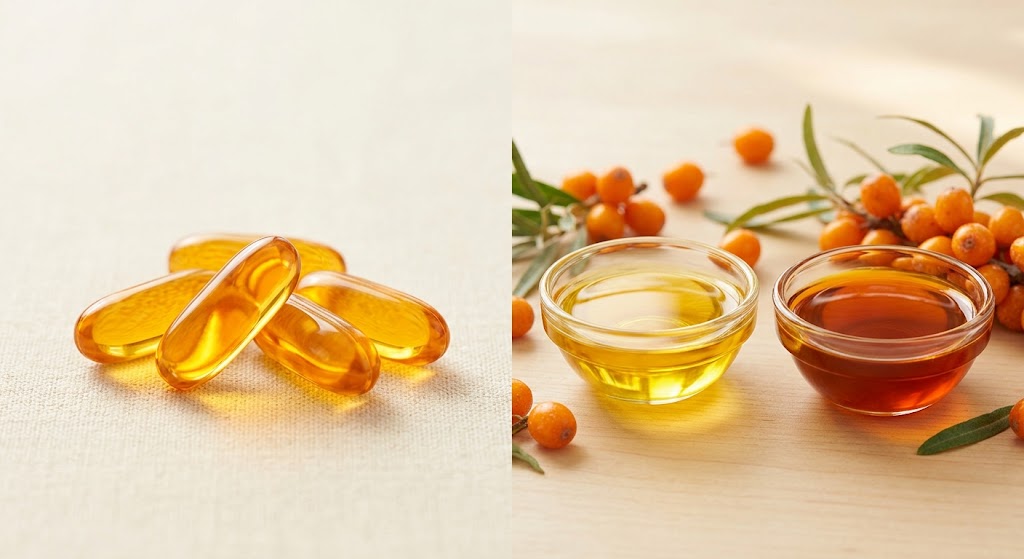
Yes, sea buckthorn oil contains omega-9. But that’s barely half the story. The real value is its complete fatty acid profile. It delivers omega-3, omega-6, omega-7, and omega-9 together – plus carotenoids and tocopherols. For formulators, it’s not about isolating one nutrient. It’s about leveraging the whole synergistic package.
Sea Buckthorn Seed Oil vs. Berry Oil Fatty Acid Profiles
Seed oil and berry oil from sea buckthorn are not the same. They have distinct fatty acid fingerprints. Each fits different use cases.
Sea Buckthorn Seed Oil – typically richer in omega-3, omega-6, and omega-9, plus vitamin E and phytosterols.
Sea Buckthorn Berry (Pulp) Oil – stands out for its higher omega-7 content (palmitoleic acid). It still provides omega-9 and a rich dose of carotenoids.
One important caveat: these profiles aren’t fixed. The actual ratios depend on the plant variety, growing region, harvest time, and extraction method (cold-pressed vs. supercritical CO₂, for example).
How to Choose an Omega-9 Source or Supplement
For Consumers: What to Check
If you’re just trying to make smarter fat choices – or you’re evaluating an omega-9 product – here are a few practical tips:
Read the fatty acid breakdown on the label. Is it a single oil, or a blend?
Look for protective packaging. Unsaturated fats are sensitive to light and oxygen. Dark glass bottles or well-sealed softgels are safer bets.
Stick to the recommended serving sizes. Fats are calorie-dense, whether it’s cooking oil or a supplement. A little goes a long way.
For Brands: What to Check in a Botanical Oil Supplier
If you’re developing supplements or functional foods, choosing the right supplier matters. Here are four standards to keep in mind:
Traceability and Sourcing – Can the supplier tell you exactly where the raw materials come from? Harvest batches, certifications, all of that?
Certified COA Reports – You need gas chromatography (GC) fatty acid profiles. Plus peroxide values, acidity, heavy metals, and microbial testing. No shortcuts.
Extraction Technology – Decide between pressed or supercritical CO₂ extraction. It depends on your needs for purity, nutrient retention, and budget.
Supply Chain and OEM/ODM Capabilities – Can they handle consistent bulk supply, formulation support, and softgel manufacturing under one roof? That’s a huge plus.

While core omega 9 benefits are easily sustained through a normal diet rich in unsaturated fats, specialized botanical oils remain a valuable addition for comprehensive nutritional and wellness formulations.
Partner with a Sea Buckthorn Expert: If you’re developing sea buckthorn-based dietary supplements, functional foods, or skincare products, YOUHERO offers premium raw materials, formulation support, softgel production, and full OEM/ODM solutions for brands and distributors.