
Sea Buckthorn vs Acai Berry: Which Berry Has More Antioxidants?
For nearly 10 years, acai has owned the “superfruit” throne – it’s the deep purple star in all smoothies on Instagram. But now a bright orange berry from the mountains of Eurasia is sort of, quietly pushing back on the idea.Sea buckthorn is used in traditional remedies for ages and the latest research suggest that its antioxidant profile could actually be superior to Acai’s. So, which berry actually should get the crown here? Let’s untangle the science, the nutrition side of it, and what each one is genuinely best for.
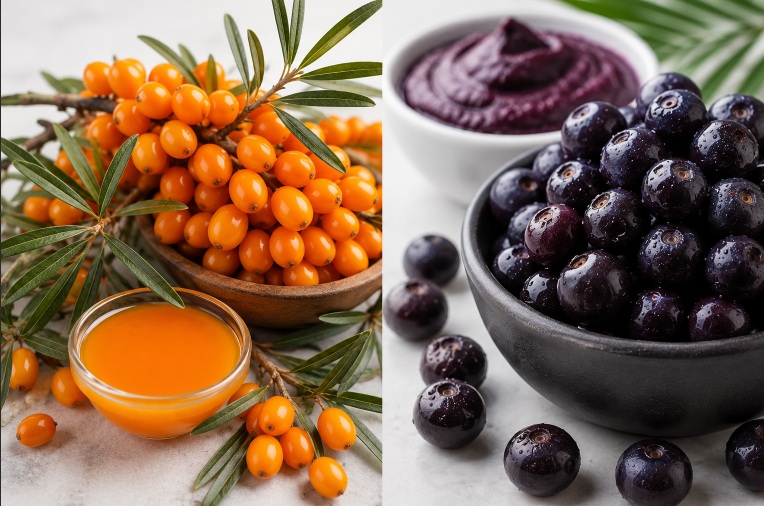
What Is Acai Berry?
Acai (Euterpe oleracea) berries, originally native to the Amazon rainforest, gained worldwide attention during the 2000s due to their high anthocyanin content – similar to what gives blueberries and red wine their antioxidant reputation. Acai boasts mild sweet earthy notes similar to berries combined with dark chocolate flavor profiles; fresh fruit spoils within 24 hours after harvesting so typically sold frozen puree, powder, or capsules as products of frozen puree, powder or capsule form.
What Is Sea Buckthorn?
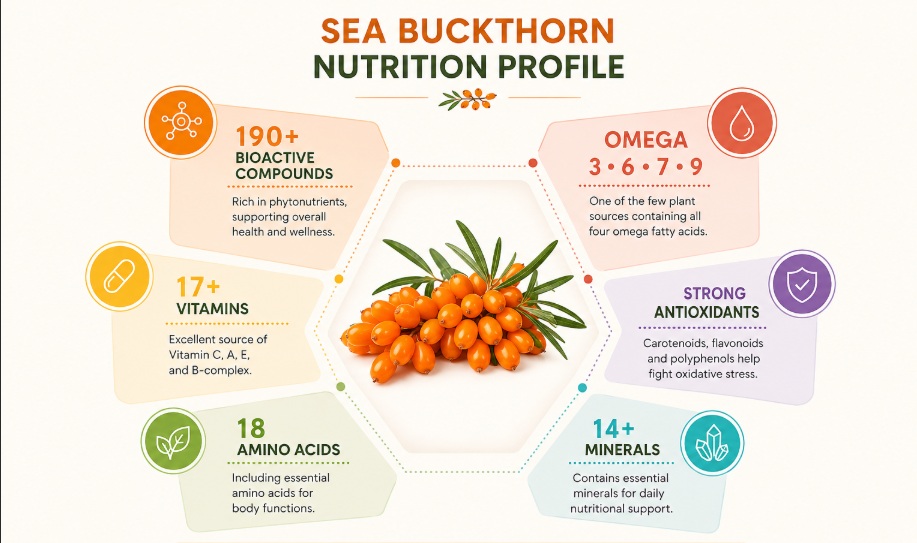
Sea buckthorn, also called Hippophae rhamnoides, is a tough, thorny shrub that grows naturally across parts of Europe and Asia. People usually notice it first for the tiny, bright orange yellow berries, which is why some folks call it “liquid gold”. For ages it has been brought up in Tibetan, Mongolian, and Russian traditional medicine, sort of as a go to botanical remedy. What makes sea buckthorn truly different nutritionally is not just one big headline compound; it’s more like the berry is packed with a wide assortment of bioactive stuff. Inside, you can find vitamins C, E, and A, plus carotenoids and flavonoids, and even a rare full-spectrum Omega 3-6-7-9 fatty acid profile.
Sea Buckthorn vs Acai Berry: Antioxidant Content Compared
Antioxidant strength is usually checked with the ORAC scale ( Oxygen Radical Absorbance Capacity ) , it sort of estimates how well a food can tame free radicals. But the exact ORAC numbers can shift depending on if the berry is tested fresh, dried or turned into a concentrated extract- the usual lab variables. Still, a lot of nutrition sources keep saying sea buckthorn’s antioxidant capacity sits well above acai, and in certain lab look-ups it can be several times higher—pretty striking really.
| Metric | Sea Buckthorn | Acai Berry |
| Primary antioxidants | Vitamin C, carotenoids, flavonoids, polyphenols | Anthocyanins |
| Vitamin C content | Extremely high (often reported as many times higher than oranges) | Minimal |
| ORAC value | The same source is consistently reported as having a higher score in comparison to other sources. | The species is high, but it is lower than sea buckthorn, in most comparisons |
| Profile of fatty acid | Omega-3, 6, 7, 9 | Healthy fats, but not a noteworthy Omega-7 |
The key takeaway isn’t just “more is better,” though. Acai’s anthocyanins are pretty well studied for helping with cardiovascular support, meanwhile sea buckthorn’s vitamin C + carotenoids kind of leans more toward immune function and skin health. When you compare total antioxidant quantity only, you really get half the picture— the kind of antioxidant matters almost as much as the amount, for what benefits you’re actually trying to get.
Why Sea Buckthorn’s Nutrient Profile Is More “Complete”
Acai has basically built its reputation on one kind of compound, mostly anthocyanins. Sea buckthorn is different; it doesn’t lean on just one main active ingredient. In fact, nutrition researchers have pulled together nearly 200 bioactive compounds in the plant, which cover vitamins, amino acids, fatty acids and minerals—so it’s more like a natural vitamin storehouse, not simply a single nutrient superfood. Some scientists even call it a “natural vitamin treasure house”.
Beyond Antioxidants: Other Key Distinctions
Fatty Acid Profile
This is where sea buckthorn really stands apart. Acai can have healthful monounsaturated fats, but it really doesn’t give you Omega-7 (palmitoleic acid) in any meaningful amount , at least not compared to sea buckthorn. Sea buckthorn is among the rare plant sources on Earth that naturally carries all four major omega fatty acids— 3, 6, 7, and 9, which makes it kind of a special option for anyone who is specifically after Omega-7 for skin and mucous membrane support.
Taste and Texture
Acai is a mild chocolate-berry taste that is easy to blend to smoothie bowls. Sea buckthorn is tart sweet, and an astringent flavor, more like an amalgamation of citrus and the cranberry. This is the reason it is more often consumed as tea, juice or as a shot for functional purposes instead of being consumed in a straight.
Sustainability and Sourcing
Acai’s huge global demand has caused real concerns over the pressure of harvesting too much to Amazon forest ecosystems. Sea buckthorn, on contrary is a very robust species that flourishes on sandy, dry, and arid soils, where no other crops can survive. it’s even utilized to prevent erosion and for land restoration in areas such as Inner Mongolia. The resilience of the plant results in an easier, more stable and less impactful supply chain.
Price and Accessibility
Acai’s limited shelf life and the long cold chain shipping route to Amazon can result in significant costs. Sea buckthorn that is grown across an extensive climate range as well as processed close to the place it’s harvested, is likely to be more easily accessible and is priced consistently in oil, juice, or in supplement form.
Which One Should You Pick?
There is no single universal winner; it really depends on what you’re trying to get:
- Choose acai if you want a berry that tastes pretty familiar and mild in smoothies and bowls, plus anthocyanins that are good for cardiovascular type support.
- Choose sea buckthorn if you want something more nutritionally complete, especially for immune support, skin well being and getting that Omega-7 intake in a more direct way.
Can You Combine Sea Buckthorn and Acai?
You do not always have to pick a side. A bit of food science research has looked at blending sea buckthorn with acai juices, and it appears the combo can lift total polyphenol levels way more than using either one by itself. Tossing both into a smoothie can also bring anthocyanins plus a wider set of vitamins and fatty acids into one drink— like getting two berry profiles at once.
Antioxidants aside, the bigger difference between these two fruits comes down to nutritional range. Acai is famous mostly for anthocyanins, while sea buckthorn offers a more wide ranging, almost “everything in one bite” mix: vitamin C, carotenoids, and Omega 3-6-7-9 fatty acids. If your goal is to add a truly rounded superfruit to your routine, Sea Buckthorn Juice or Sea Buckthorn Supplement is worth checking out.