
What Can You Mix With Sea Buckthorn Oil?
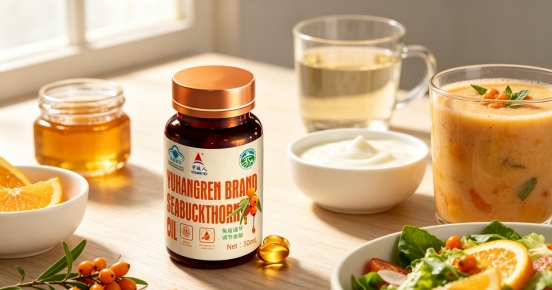
Sea buckthorn oil works well with neutral and mild food items – think smoothies, yogurt, honey and lighter carrier oils that can be used for topical purposes. It’s not about coming up with an unusual combination, and more about preserving the oil’s nutrient profile, while making it easier to consume regularly. Here’s a concise breakdown of what is effective when taking, how it works on the skin and also what needs consideration prior to combining with sea buckthorn oil.
Mixing Sea Buckthorn Oil Into Food and Drinks
Sea buckthorn oil is usually consumed by the spoonful or as capsules and the flavor is tangy and slightly sharp, and with a slight bitterness — is much easier to handle when combined with something that can balance it.
The honey or the warm drink. Sea buckthorn oil in a teaspoon dissolved in warm (not cold) water along with a small amount of honey is among the most popular ways to be consumed. Honey’s sweetness balances the tartness, while the water can help reduce the oil’s abrasiveness for those who are trying to try it out for the very first time.
Smoothies and drinks. Since sea buckthorn oil fat-soluble, making it into a juice or incorporating it into a sea buckthorn juice actually aids in the absorption of the fat-soluble compounds which include Vitamin E and beta-carotene better than consuming it on empty stomachs with water by itself. Bananas, berries, and citrus are able to hide their tartness more effectively than blends of vegetables.
Oatmeal or yogurt. Mixing the oil in plain yogurt or warm bowls or bowl of oatmeal are a typical option in areas in which sea buckthorn has become a common food staple, like regions in Central Asia and Northern China. The creamy texture of yogurt particularly does a great job of rounded the oil’s sharper nuances.
Salad dressings. Whisked into a vinaigrette with olive oil, lemon juice, and a touch of mustard, sea buckthorn oil adds both color and nutritional density without overwhelming the dish — a light touch is enough, since a little goes a long way flavor-wise.
Combining Sea Buckthorn Oil With Other Oils
Sea buckthorn oil happens to be one of the very few plant oils that naturally has all four of the major omega fatty acid types: omega-3, 6, 7 9 and omega-3, which is the reason it is often mixed with other oils, rather than solely by itself in both a topical and nutritional sense.
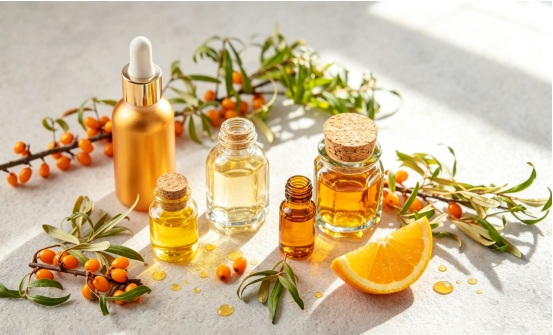
Topical blends with carrier oils. For actual skin use, sea buckthorn oil is strong and pretty deeply colored—if you use it undiluted, it can, for a short time, stain skin or fabric that orange. Usually, you take just a small amount of it and mix it into a lighter carrier oil, like jojoba, argan, or sweet almond oil. That blending approach keeps the antioxidant punch and the fatty acid advantages, but the mix goes on smoother and more evenly.
Pairing with other omega sources. Because seed oil and pulp oil from the same plant actually have different fatty acid profiles — seed oil is concentrated in linoleic and alpha-linolenic acid, while pulp oil is the primary plant source of palmitoleic acid (omega-7) — some formulations combine the two, or pair seed oil with a separate omega-7 or fish oil source, to round out the fatty acid spectrum. This is a formulation decision best guided by a nutritionist or the supplement manufacturer’s own specifications rather than mixed casually at home.
What to Be Cautious About Combining
This is the part of the conversation that gets skipped too often, and it matters more than the recipe ideas above.
Medications. A review from 2023 that was published in Pharmacological Research – Modern Chinese Medicine notes that sea buckthorn could interfere with blood-thinning drugs and blood sugar-lowering medications, and cyclosporine. This is likely because of its effects on the function of platelets in glucose metabolism in addition to immune modulation. Any person taking prescription medications that fall into these categories should speak with a physician or pharmacist prior to applying sea buckthorn oils into their regimen. This isn’t a mixture to play with by yourself.
It is a good idea to stack it with other vitamin E-rich supplements. Sea Buckthorn Seed Oil is naturally rich in tocopherols (a type that is a form of vitamin E), typically around 70-120 mg per 100 grams of oil. Mixing this with high dose vitamin E supplements and not accounting for the entire intake may cause someone to go over the suggested daily intake in time. It’s important to check the vitamin E content of your entire stack of supplements instead of assuming that each supplement is safe on its own.
Heat. Sea buckthorn oil’s fat acids and antioxidants are sensitive to heat. Incorporating it into the hot cooking pot straight from the stove or using it in high-temperature cooking, can degrade the nutritional benefits. It’s more suitable to be added after cooking, or in warm and room-temperature dishes.
Choosing an Oil That’s Actually Worth Mixing
There are many different kinds of sea buckthorn oils that is available has the same chemical composition which affects the way it works once it’s mixed in drinks, food items or skin care. Sea buckthorn oil extracted by the supercritical CO2 extraction processit is a solvent-free, low temperature procedure – is likely to keep more of its antioxidant and fatty acid content in comparison to oil that is pressed or extracted using chemicals or heat that could degrade the more delicate components before it reaches bottles.
For anyone who is looking to source sea buckthorn oil to use for personal use or to be used as an ingredient for their formulations, examining for a verified fatty acid or vitamin E breakdown instead of relying on an unsubstantiated “rich in nutrients” claim is the most trustworthy way to determine what you’re adding to your daily routine.
Sea buckthorn oil blends well with yogurt, honey smoothies, smoothies, and light salad dressings that are suitable for daily usage, and gentle carrier oils for application to the skin. The most dangerous combinations aren’t purely culinary, but medications that interact with each other, unmonitored vitamin E stacking, and high-temperature cooking, all of which can compromise the security or nutritional value of the oil. If you’re formulating with sea buckthorn seed oil rather than just using it at home, working from a documented nutrient profile — like the linoleic acid, linolenic acid, and vitamin E figures found on a supplier’s product specification — is the starting point for getting the combination right.