
What Does Sea Buckthorn Juice Taste Like? Flavor, Nutrition, and How to Enjoy It
If you’ve heard about sea buckthorn juice’s amazing health reputation, but still hesitated to try it because you’re not sure what you’re really getting into, you’re not alone. This bright orange juice has a reputation for being a bit of an acquired flavor, and honestly that reputation is pretty earned. Honestly, once you get the hang of why it tastes the way it does — and how to enjoy it in a way that feels natural for you — it becomes much easier to see why lots of people keep coming back to it. Here’s what you can expect, plus a clear look at the nutrition science behind the whole taste situation.
What Does Sea Buckthorn Juice Actually Taste Like?
Let’s not sugarcoat it ( pun intended ): sea buckthorn juice is tart, tangy, and it has this faintly bitter oily finish that catches most first timers off guard. If you ask most people what it reminds them of, you usually hear something like a mix of sour orange, cranberry, and passionfruit, but sometimes there’s this faint “unripe mango” vibe too. Also, it doesn’t feel like a normal juice—its texture is way thicker, more viscous, almost kind of resinous, mostly because the berry pulp naturally holds oils that stay in the drink.
The first sip is likely to become the strongest portion of the experience. The acidity is sour, citrus-forward, and some compare to slicing the skin of a lemon. The next sip is a more mellow somewhat earthy aftertaste, which is softer with time. Many regular drinkers have reported that the flavor is noticeably more palatable after the first handful of servings when the palate is able to adjust to its distinctive taste.

Why Does It Taste So Tart and Slightly Bitter?
The tartness isn’t an effect, but a chemical. Sea Buckthorn berries are naturally high in organic acids, and have an extraordinary amount of vitamin C. In fact, certain formulations providing as much as 170mg Vitamin C in a serving. That’s far higher than what you’d see in your normal glasses of juice from orange. The concentrated acidity is responsible for the sharp, citrus-like taste. Then there is the unique oil composition — it’s a complete range of Omega-3, 6 7 as well as 9 acids, which contributes the slightly oily mouthfeel and subtle bitterness that lingers after the acidity fades.
Factors That Change the Flavor
Sea buckthorn juice is not all the same, and some production choices can make a huge difference in how tasty an ounce of juice turns out to be. You can usually notice it fast too, once you take a sip.
- Fresh-pressed vs. NFC (Not-From-Concentrate) vs. reconstituted juice — the fresh-pressed style often keeps a rounder, more natural flavor, while reconstituted concentrate can feel a bit flatter, like it’s missing one or two notes.
- Sugar-free vs. lightly sweetened formulas — a small amount of sweetener can soften the tartness quite a lot, without fully blurring the fruit’s actual character.
- Regional and varietal differences — berries from separate regions and climates (Himalayan, Northern European, or Inner Mongolian origins, for instance ) tend to bring distinct acidity and sweetness ratios.
- Dilution ratio — how concentrated the juice is before it gets bottled controls how sharp that first-sip tang comes across, so it’s not just “taste”, it’s intensity too.
Is the Taste Worth It? A Quick Look at the Nutrition
Here’s the honest trade-off: that sharp flavor kind of shows up along with a genuinely dense nutrient profile. Past vitamin C sea buckthorn also brings vitamin E, beta-carotene, and a wide mix of antioxidant flavonoids. In a 2023 clinical study in Roczniki Państwowego Zakładu Higieny, daily sea buckthorn juice over eight weeks was linked with lower body fat, visceral fat, LDL cholesterol, and inflammatory markers like CRP, specifically in women with hypercholesterolemia, plus higher HDL cholesterol. Also, research gathered by Drugs.com points to sea buckthorn’s documented antioxidant, anti-inflammatory, and cardiovascular-protective properties, though it clearly says that solid clinical evidence is still building for a lot of the more specific claimed uses.
So yeah, that whole mix of nutrient weight and still-developing human data is probably why most people who are persistent don’t quit after the first few sips; the “acquired taste” phase doesn’t last forever because the payoff feels fairly proportional to the effort.
How to Make Sea Buckthorn Juice Taste Better
If straight sea buckthorn juice isn’t totally your thing yet, a few small tweaks can help a lot, and yeah it really does change things
Dilute first. Begin with a 1:1 mix of juice and water, or even coconut water , then keep tuning it until it tastes right. This is probably the most effective move to mellow that early sharpness.
Add a natural sweetener. Just a small spoonful of honey or maple syrup can smooth the tart notes without flattening the whole flavor.
Stir it into a smoothie. When you combine it with banana, mango, or yogurt, the bitterness feels less loud while a good part of the nutritional punch still stays there.
Serve it chilled. Not room temperature. When it’s cold, the acidity and that slightly astringent edge just seem less noticeable.
Use it as a small shot before meals. A lot of people go for about a 20–30ml concentrated pour instead of a full glass, almost like a quick wellness ritual rather than a casual drink.
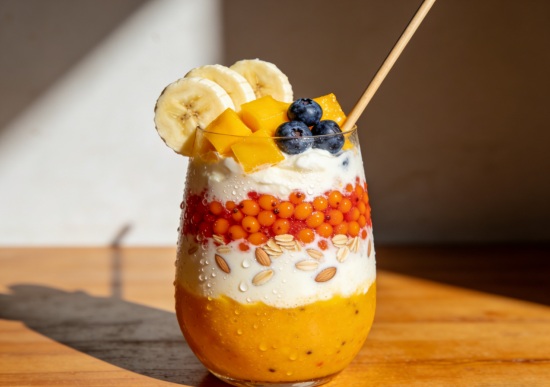
You can also read more to know other ways.
Sea Buckthorn Juice vs. Other Tart Juices You Already Know
| Juice | Tartness Level | Closest Flavor Comparison |
| Sea Buckthorn | Very High | Sweet orange + cranberry + passionfruit |
| Cranberry | High | Sharp, less oily |
| Pomegranate | Moderate | Sweet-tart, less acidic |
| Tart Cherry | Moderate | Sweeter, less citrus-forward |
If you’re already a fan of straight cranberry juices the sourness of sea buckthorn shouldn’t be a surprise — it just adds a more oily texture and citrus tang to the mix.
Sea buckthorn juice won’t be able to be awarded for its universally delicious taste straight from the bottle, but its flavor is a minor cost for a nutrition profile that’s difficult to beat. Mix it up or sweeten it a bit, or mix it into a smoothie and it’s an excellent healthy lifestyles that’s easy to stick with.