
Which Part of Sea Buckthorn Has The Most Nutrients?
Sea Buckthorn is often labeled as a “miracle plant,” but for formulators and health professionals there are many different components to the plant are made equal. While the whole plant is revered in traditional medicine, contemporary extraction research has revealed that nutritional content differs dramatically between the pulp of the fruit as well as the seeds and leaves. To maximize the benefits, it is essential to understand what component contains the particular nutrients needed to be healthy. Let’s explain the nutritional profile of each component in order to assist you in choosing the most efficient solution to meet your individual health and wellness objectives.
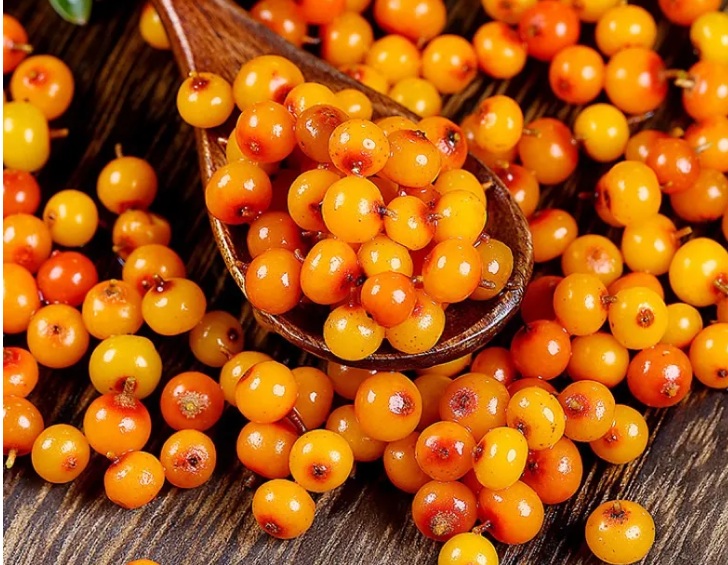
The Sea Buckthorn Nutritional Map
Understanding the particular nutrient profile for each part, it’s important if you want effective supplementation. Every component kind of has its own physiological role , based on its distinct chemical composition, not just in theory but in real use too.
| Plant Part | Primary Nutrient Profile | Best For |
| Fruit Pulp | Palmitoleic Acid (Omega-7), Carotenoids | Skin Barrier & Mucous Membranes |
| Seeds | Omega-3, 6, 9 Fatty Acids | Heart Health & Inflammation |
| Leaves | Flavonoids, Proteins, Polyphenols | Antioxidant Support & Tea Blends |
| Juice | Vitamin C, Organic Acids | Immune Regulation |
- Fruit Pulp: The pulp is the main reservoir for Omega-7 (Palmitoleic acid) an uncommon fat that is essential to skin elasticity as well as the moisture in mucous membranes.
- Seeds: The seeds have an array of Omega-3,6, along with 9 essential fat acids, which makes them the ideal choice for cardiovascular health as well as systemic anti-inflammatory aid.
- Leaf: Often omitted, the leaves are rich in high-quality flavonoids and protein and flavonoids, providing a distinctive profile that is superior in the field of antioxidant support and metabolic health.
- Juice: The juice contents are the most effective source for bio-available Vitamin C along with organic acids both of which are vital to immediate immune system control.
Why Extraction Source Matters: The Science of Bioavailability
The effectiveness that comes from Sea Buckthorn is frequently misunderstood and many believe that a higher concentration of nutrient will result in greater results. In fact, the outcome of treatment is determined by bioavailability, the degree that your body is able to efficiently absorb and utilize certain components.
For example, Omega-7 (palmitoleic acid) that is found in the pulp of fruits is naturally lipid-soluble. Therefore, it has to be taken as an oil extract in order to be absorbed properly. Water-based extraction methods are not able to offer the same physiological benefits.
Beyond the individual absorption, it is important to take into consideration what is known as the “Synergy Effect,” where the organic components of plants combine to create superior health outcomes when compared to isolated synthetic nutrients. To safeguard these delicate interactions, the production of high-end industrial products currently rely on Supercritical CO2 extraction. Contrary to conventional mechanical or heating methods which could degrade volatile compounds and reduce the plant’s natural appearance The method employs low pressure and temperatures to separate oils, while also preserving their structure integrity. In the end, the difference between the extracts from seed and pulp sources is not just technical, but fundamentally affects the final beneficial impact of your wellbeing.elps to promote the development of a balanced, controlled immune system, allowing you to get through your day with greater ease.
How to Choose Based on Your Health Goals
Finding the perfect Sea Buckthorn product requires a carefully planned approach that aligns particular plant elements to your specific wellness goals.
For Skin and Anti-Aging
If your primary objective is increasing the effectiveness of your skin barrier or reducing dryness that is persistent, or seeking out superior anti-aging benefits, you must concentrate upon Pulp Oil. Its high content in Omega-7 (palmitoleic acid) provides specific nourishment to the skin layers. This is a unique therapeutic benefit that leaf oils or seed extracts cannot duplicate.
For Heart Health and Inflammation
For managing health and wellness as well as cardiovascular support or an internal inflammation issue, Seed Oil stands as the industry standard. It offers a rich balanced and balanced profile of essential fatty acids that support good blood levels and aid in healing of cells across the entire body.
For Daily Wellness and Immunity
If you’re in search of broad antioxidant defense, long-lasting energy levels, or even immune system regulation, Leaf Extracts and Pure Fruit Juice can be considered efficient, cost-effective alternatives. These ingredients are high in flavonoids and vitamins making them ideal, easy options for maintaining your daily homeostasis and health without the requirement for high-concentration lipid extracts.
The Youhero Quality Promise
At Youhero, we fundamentally recognize that the caliber of your finished product is only as exceptional as the raw materials you begin with. Therefore, our whole strategy for Sea Buckthorn management is deeply grounded in a strict “source-first” philosophy.
- Geographic Advantage: We obtain our raw materials from regions where the harsh and unforgiving environment forces plants to concentrate its essential nutrients. This naturally-induced stress leads to an above-average proportion of total flavonoids and essential fat acids.
- Advanced Processing: To safeguard this vital nutrient, we employ precise cold-pressing techniques and the most advanced supercritical CO2 extraction technology. These techniques guarantee that delicate chemical bonds in Omega-7 along with other active substances remain robust and stable.
- Transparent Sourcing: Integrity lies at the core of our business. Hence every batch goes through rigorous tests to determine its the purity. This strict process ensures that our customers receive only the best ingredients free of the heavy metals and synthetic stabilizers which allows you to effortlessly keep standards of “Clean Label” standards required in today’s highly competitive and healthy marketplaces.
We provide high-purity and scientifically-proven ingredients your business needs to make a statement.
Matching Nutrition to Need
There isn’t one “best” part of the Sea Buckthorn plant; instead the most effective component is determined by the health goals you have in mind. To achieve the best results it is essential to be sure to align your source with your objectives. Make sure you prioritize fruit pulp if your primary concern is the repair of your skin barrier and mucosal health because of its unique Omega-7 profile. If your primary goals are cardiovascular health and inflammation in the system pay attention to seeds oils as they are rich in essential fats. Additionally, you can use leaf extracts to get the metabolic benefits and powerful antioxidant protection. By focusing on this specific approach, you to maximize the potential of this remarkable plant.
References
Zhou, T. et al. (2025). Bioavailability of lipophilic active compounds from sea buckthorn oil extracts. Food & Function, 16(5), 2210–2221. https://pubs.rsc.org/en/content/articlehtml/2025/fo/d5fo01306b
Li, X., Wang, Y., & Zhang, H. (2025). Nutrient distribution differences in fruit pulp, seeds, and leaves of sea buckthorn (Hippophae rhamnoides L.). Foods, 15(13), 1389. https://pmc.ncbi.nlm.nih.gov/articles/PMC13115441/pdf/foods-15-01389.pdf
Łukaszewicz, M. (2019). Palmitoleic acid (omega 7) from sea buckthorn pulp oil: Biosynthesis and skin protective activity. Nutrients, 11(5), 1128. https://pmc.ncbi.nlm.nih.gov/articles/PMC6528223/
Rytel, E., et al. (2022). Fatty acid composition of sea buckthorn seed oil and its effects on cardiovascular inflammation markers. Frontiers in Nutrition, 9, 1067813. https://public-pages-files-2025.frontiersin.org/journals/nutrition/articles/10.3389/fnut.2022.1067813/pdf
Liu, J. et al. (2024). Flavonoid profiling and antioxidant capacity of sea buckthorn leaf extracts. Molecules, 29(12), 5762. https://pmc.ncbi.nlm.nih.gov/articles/PMC11527678/
Chen, L., & Wu, S. (2020). Bioavailable vitamin C and organic acids in sea buckthorn juice. RSC Advances, 10(40), 23862–23871. https://pubs.rsc.org/lt/content/articlepdf/2020/ra/d0ra06488b